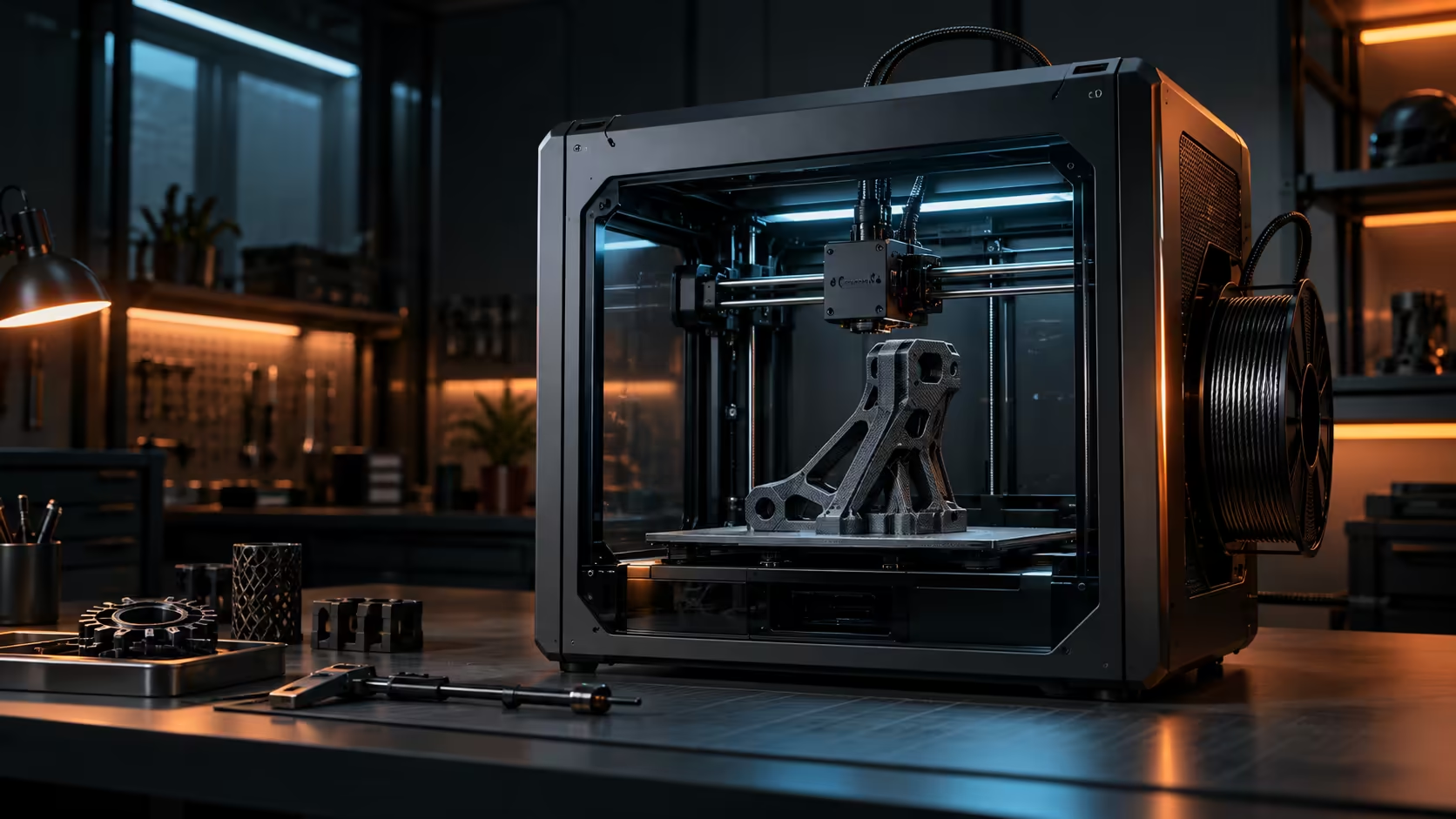
A closed chamber adds cost to a printer's price tag, and in a working South African workshop that extra cost earns its keep in more than one place at once. Are enclosed 3D printers worth the extra cost for South African workshops comes down to counting three separate benefits rather than one.
Quick Answer
Yes, for a workshop specifically, because the chamber pays for itself three ways: keeping grinding and sanding dust out of the printer's moving parts, containing fumes near a bench where people are actually working, and stopping large ABS or ASA parts curling as they cool. A Creality K1C with built-in filtration lands at R12,599, and each of those three benefits matters independently in a genuine workshop environment.
🌫️ Keeping workshop dust out of the machine
A workshop generates dust from sources that have nothing to do with 3D printing, grinding, sanding, general foot traffic, and that dust settles on any exposed surface including a printer's rails and electronics, worse still on a dry Highveld property where a Gauteng winter kicks up fine dust through every gap in a workshop door. An enclosed frame shields the internals from this considerably better than an open one, which matters for a machine expected to run for 3 to 5 years, not just this week's print quality.
😷 Containing fumes where people are working
A workshop bench is occupied space for 6 to 8 hours a day, unlike a spare room set aside purely for printing, so fumes from ABS or similar materials matter more here than they would in an unoccupied room. Containing those fumes inside the chamber, with filtration handling what escapes, protects the people actually working nearby rather than just improving the finished print.
🔥 Stopping large parts curling as they cool
Workshop projects tend toward larger, functional parts, brackets, enclosures, jigs, and these are exactly the prints most vulnerable to warping from uneven cooling in open air. An enclosure keeps temperature stable around the part as it prints, which directly reduces the curling and cracking that larger ABS or ASA pieces are prone to without one.
Weigh these three benefits against the workshop's actual conditions before deciding, since a well-ventilated, low-dust workshop printing mostly PLA gets less value from an enclosure than one running ABS regularly in a dusty space. Browse filament suited to enclosed printing specifically, and set up around it with a gaming setup style desk arrangement if the printer shares space with design and slicing work.
🔧 A quick way to score the decision for your own workshop
Score your own workshop out of 3 on each factor, dust exposure, fume-sensitive nearby workspace, and how often ABS or ASA gets printed, then add the three scores together. A total of 6 or higher makes the enclosure premium an easy decision; a total under 3, mostly PLA, low dust, good ventilation, means the extra cost buys less real benefit for your specific situation.
Check the 3D printer range for enclosed options once that score points clearly toward yes, rather than defaulting to an enclosure out of habit or defaulting to open-frame purely to save money upfront.
💷 Pricing the enclosure premium against real workshop costs
An enclosed machine at R12,599 compares directly against a similarly specified open-frame printer often priced somewhere R1,500 to R2,500 lower, and that specific gap genuinely needs weighing against real workshop costs rather than simply treated as pure, uncomplicated savings on paper. A single warped ABS bracket reprinted entirely from scratch, plus the wasted filament and lost machine time that goes with it, frequently exceeds that entire price gap all on its own within just the first few months of genuinely regular use.
Factor in staff time too wherever a workshop has more than one person actually using the machine, since a print that fails from dust contamination or fumes affecting nearby work costs considerably more than just filament, it costs someone's entire afternoon redoing a job that really should have finished cleanly the first time round. Spread across a full year of genuinely regular workshop use, that recovered afternoon or two is usually worth considerably more on its own than the entire R1,500 to R2,500 premium the enclosure cost in the first place.
🧰 What an enclosure does not solve on its own
An enclosure is genuinely not a substitute for basic, ongoing workshop housekeeping habits. Grinding and sanding stations still need their own dust extraction, and a printer positioned within 1 to 2 metres of one will still see reduced benefit from its enclosure if the door gets opened and closed constantly during a job. Position the machine away from the dustiest, busiest part of the workshop even when it is enclosed, since the enclosure reduces exposure, it does not eliminate it entirely on its own.
Frequently Asked Questions
Does an enclosure matter if a workshop mainly prints PLA?
Less critically, since PLA tolerates open-air printing reasonably well; the benefit grows considerably once ABS or similar materials enter regular use.
How much does workshop dust actually affect a printer over time?
Accumulated dust on rails and inside electronics can affect reliability and maintenance needs over months, which an enclosed frame reduces significantly.
Is fume containment more important in a shared workshop than a solo one?
Yes, since more people are likely to be working near the printer regularly, containing fumes protects everyone in that shared space.
Does an enclosure eliminate warping entirely on large parts?
It significantly reduces it by stabilising temperature, though very large or geometry-sensitive parts can still benefit from additional measures like adhesion aids.
How much does an enclosed machine typically cost over a similar open-frame one?
Often R1,500 to R2,500 more, a gap that a single warped ABS reprint frequently exceeds within the first few months of regular workshop use.
Should the printer still be positioned away from dusty stations if it is enclosed?
Yes, an enclosure reduces exposure but does not eliminate it, especially if the door gets opened and closed frequently during a busy workshop day.
How should I score my own workshop's need for an enclosure?
Rate dust exposure, fume-sensitive nearby work, and how often ABS or ASA gets printed out of 3 each; a combined total of 6 or higher makes the enclosure an easy decision.
Weighing up an enclosed printer for your workshop?
Count the dust, fume and warping benefits together, not just the price difference.