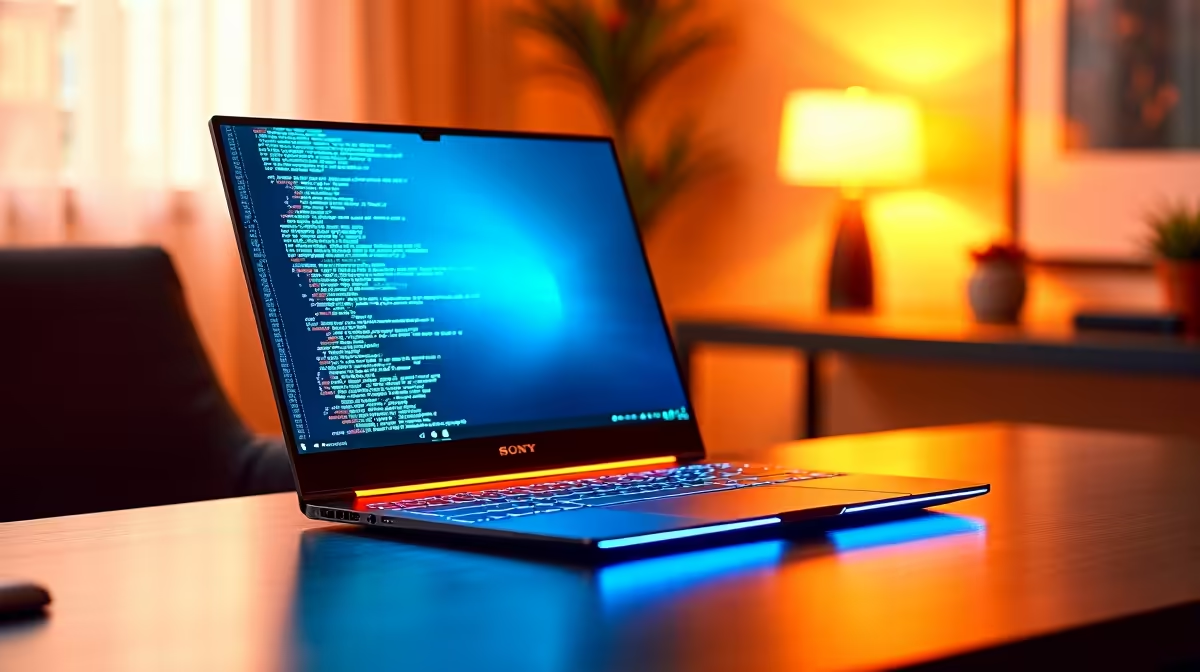
Staring at thousands of lines of code? If your laptop screen feels like it's fighting you, you're not just losing productivity—you're getting a one-way ticket to eyestrain city. For developers in South Africa, a crisp, clear display is non-negotiable, especially when you're debugging deep into the night. The right panel isn't a luxury; it's the most critical tool in your arsenal. Let's break down how to find the best laptop screen for programming in South Africa.
Why Your Screen is Your Most Important Coding Tool
Think about it: every variable, every function, every frustrating semicolon error is processed through your eyes. A low-resolution or dim screen forces you to squint, slowing you down and causing physical discomfort. The goal is to have a display that makes text so sharp it feels like print, allowing you to stay in a state of flow for longer. A quality screen is a direct investment in your work quality and well-being.
A great display allows for more comfortable multitasking, letting you snap your IDE, a terminal, and a browser window side-by-side without everything feeling cramped. When you're ready to upgrade, you can browse through our diverse range of laptop specials to see these features in action.
Decoding the Specs: What Programmers Actually Need
Forget the marketing hype. When you're looking for the best laptop display for development, only a few key specifications truly matter. Getting these right will have a massive impact on your daily workflow. ✨
Resolution and Size: The Sweet Spot for Screen Real Estate
More pixels mean more code on screen at once.
- Full HD (1920x1080): This is the absolute minimum for a decent coding experience on a 14 or 15-inch laptop. It's functional and budget-friendly.
- QHD (2560x1440): This is the sweet spot. On a 15 or 16-inch screen, QHD provides a significant jump in sharpness and usable space over FHD without needing aggressive scaling that can sometimes make text look weird.
- 4K (3840x2160): While incredibly sharp, 4K on a laptop screen can be overkill for pure coding. It often requires scaling up text and UI elements, negating some of the real estate benefits. However, if you also do design or video work, it's a fantastic choice.
Panel Technology: IPS and Matte Finish are King 👑
The type of panel and its finish are arguably more important than resolution.
- Panel Type: Always aim for an IPS (In-Plane Switching) panel. They offer superior colour accuracy and wide viewing angles, so colours in your UI don't shift if you move your head.
- Screen Finish: A matte (anti-glare) finish is non-negotiable for a programmer. It diffuses reflections from overhead lights or windows, preventing distracting glare and reducing eye fatigue. Glossy screens might look vibrant in a dark room, but they become mirrors in a typical office or coffee shop.
Interestingly, many of the best screens are found on high-performance machines. You'll often find that some of the best gaming laptop deals feature the high-resolution, colour-accurate IPS panels that developers love.
Code Comfort Pro Tip 🔧
Combine your IDE's dark mode with your operating system's built-in blue light filter (like Night Light on Windows or Night Shift on macOS). This dramatically reduces blue light exposure during late-night coding sessions, helping to minimise eye strain and improve sleep quality after a long day of debugging.
Finding the Best Programming Laptop Screen in SA
Now that you know what to look for, how do you find it? The good news is that brilliant screens are no longer exclusive to top-tier models that cost a fortune. You can find the ideal display on both powerful AMD laptops on special and a wide variety of cutting-edge Intel-powered machines.
When comparing models, prioritise the specs in this order:
- Matte IPS Panel: Your first checkpoint. If it's not a matte IPS, think twice.
- Resolution: Aim for QHD if your budget allows, but FHD is a solid baseline.
- Brightness: Look for screens with 300 nits or more. This ensures your screen is readable even in a brightly lit South African office or near a window.
By focusing on these core features, you'll find the best laptop screen for programming that fits your needs and helps you write better code with less strain. 🚀
Ready to Code Without Compromise?
Choosing the best laptop screen for programming can feel complex, but focusing on resolution, panel type, and a matte finish makes it simple. Don't let a poor display be the bottleneck in your workflow. Explore our massive range of laptop specials and find the perfect coding machine today.