CPU Architecture Explained: Unlocking Performance
Ever wondered why some games run smoother than pap on a hot plate, while others stutter like a dial-up connection? The secret often lies deep within your PC's brain: its CPU architecture. For South African gamers and tech enthusiasts, understanding how your processor is built isn't just for the tech gurus; it's the key to unlocking true performance, making smarter upgrade choices, and ultimately, a more satisfying digital experience. Let's peel back the layers and demystify the heart of your machine. 🔧
The Brain of Your Rig: What is CPU Architecture?
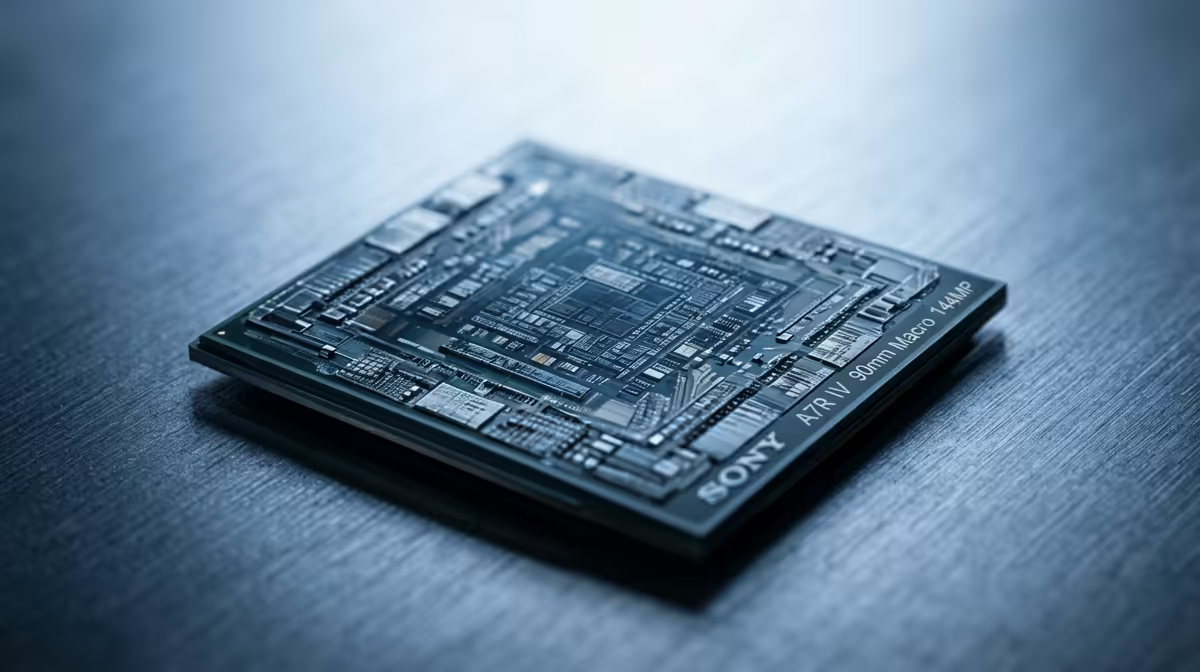
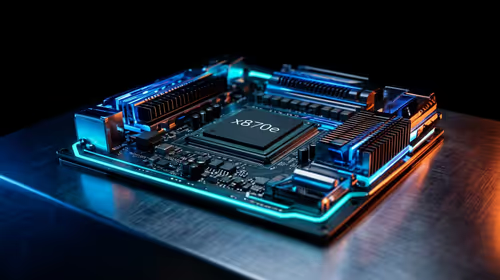
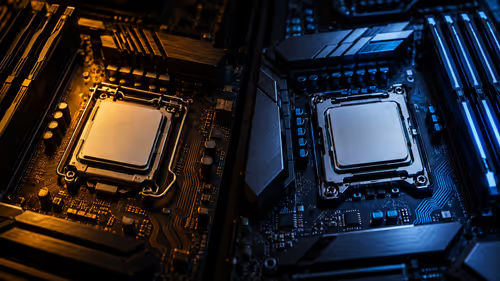
At its core, CPU architecture refers to the fundamental design and implementation of a central processing unit. Think of it as the blueprint for how your processor handles instructions, manages data, and communicates with other components. It dictates everything from how many calculations it can perform per second to how efficiently it uses power. A well-designed architecture means your system can process more tasks, faster, and with less wasted energy.
Understanding these foundational concepts is crucial when you’re looking to build a new rig or upgrade your current setup. It helps you see beyond just core counts and clock speeds, enabling you to make informed decisions that genuinely impact your gaming and productivity. If you're pondering a new build or a significant upgrade, exploring the full range of options is a smart first step. Check out the latest CPU processors online to see what's available.
Cores, Threads, and Clocks: The Fundamentals
Let's break down the basic building blocks that contribute to the overall CPU architecture:
- Cores: These are the individual "brains" within your CPU. A quad-core processor has four independent processing units. More cores generally mean the CPU can handle more tasks simultaneously, which is great for multitasking or demanding applications.
- Threads: Think of threads as virtual cores. A single physical core can often handle two threads (hyper-threading for Intel, SMT for AMD), allowing it to process two sets of instructions concurrently, improving efficiency.
- Clock Speed (GHz): This measures how many cycles per second your CPU can perform. A higher clock speed generally means faster processing for single-threaded tasks, though overall performance is a complex interplay of all these factors.
Remember that time your game stuttered during a huge online battle? That's often your CPU struggling to juggle all the tasks – rendering graphics, processing AI, managing network data – a clear sign that its architecture might be hitting its limits.
Diving Deeper: Intel vs. AMD Architectures
When we talk about CPU architecture explained, we inevitably land on the two titans: Intel and AMD. Both have distinct approaches to processor design, each with strengths that appeal to different users.
Intel's approach has often focused on strong single-core performance, historically making them a favourite for pure gaming rigs where raw clock speed often matters. Their latest generations, like the 12th Gen and beyond, introduce a "hybrid" architecture, blending high-performance P-cores (Performance-cores) with efficient E-cores (Efficient-cores). This design allows the CPU to dynamically assign tasks, dedicating demanding workloads to the P-cores and background tasks to the E-cores, optimising both performance and power consumption. If you're looking for cutting-edge gaming performance and innovative hybrid designs, exploring Intel CPUs is a solid choice.
AMD's philosophy, particularly with their Ryzen series, has championed a "chiplet" design. Instead of one large silicon die, AMD uses multiple smaller "chiplets" connected on a single package. This allows for higher core counts at potentially more competitive price points, making them a formidable option for content creators, streamers, and anyone needing serious multi-threaded horsepower. Their focus on multi-core dominance has pushed the boundaries of what's possible in desktop computing. For those who demand multi-tasking power and value, consider the robust range of AMD CPUs.
Optimising Your CPU
Ensure your CPU cooler is up to the task! A well-cooled processor can maintain higher boost clocks for longer, directly translating to more consistent performance, especially during intense gaming sessions or heavy workloads. Don't let thermal throttling slow you down.
Unlocking Your Rig's Full Potential: Performance & Upgrades
Understanding CPU architecture is more than just tech trivia; it's about making informed decisions that impact your daily computing. For gamers, a CPU with a strong architecture means fewer frame drops, faster load times, and a smoother overall experience. For content creators, it translates to quicker video rendering, faster compilation times, and less waiting around.
When considering an upgrade, don't just chase the highest numbers. Think about your primary use case. Are you a competitive gamer needing every last FPS? Or a streamer who juggles games, OBS, and chat simultaneously? Different architectures excel in different scenarios. By understanding the underlying design, you can choose a processor that truly unlocks performance for your specific needs, rather than just buying the most expensive option. Don't settle for 'good enough' when 'great' is within reach. Elevate your PC experience and see what a difference the right CPU architecture can make. 🚀✨
Upgrade Your Power Today!
Ready to experience the difference a cutting-edge CPU can make? Don't let outdated hardware hold you back from ultimate performance. Shop now at Evetech for performance that leaves lag in the dust.