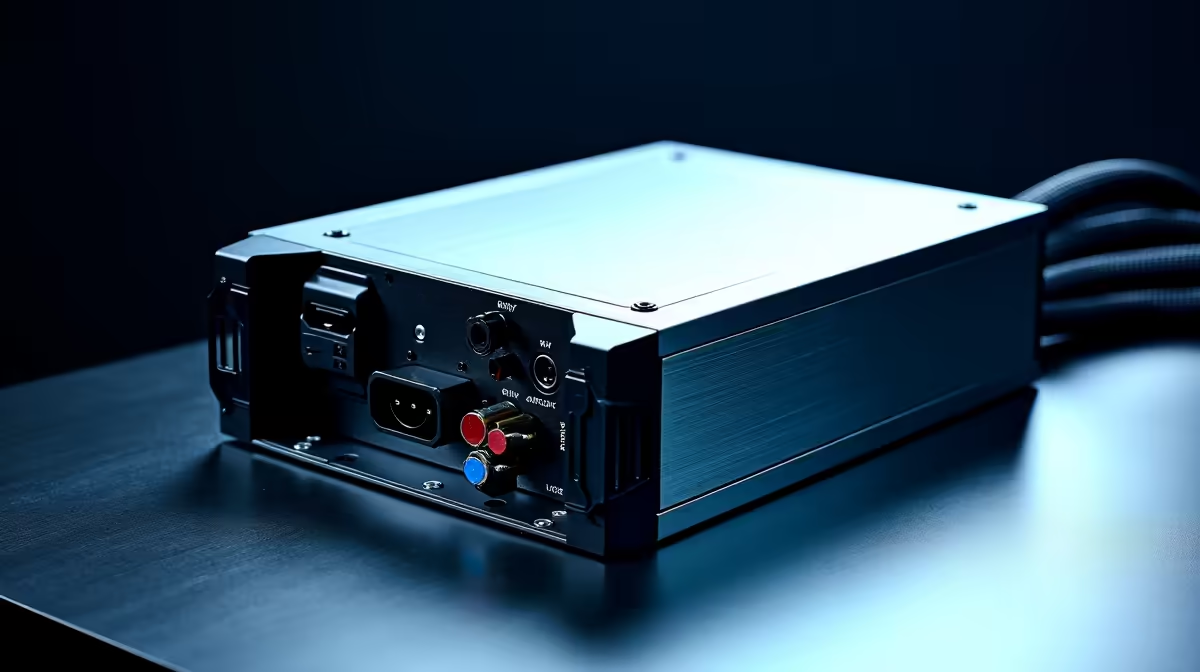
You’re staring at your PC parts list, ready to build your dream rig. You’ve picked the perfect GPU, a beastly CPU, and enough RGB to light up Cape Town. But what about the heart of your machine… the Power Supply Unit (PSU)? Choosing between a modular vs non-modular PSU can feel confusing, but it’s one of the most important decisions for your build’s future. It dictates not just power, but cleanliness, airflow, and your sanity.
The Non-Modular PSU: The Old-School Workhorse
So, what’s the deal with a non-modular PSU? Think of it as a power supply with a permanent, built-in bundle of cables. Every single cable—the 24-pin motherboard connector, CPU power, PCIe for your graphics card, SATA for your drives—is attached right out of the box.
Pros & Cons of Non-Modular
- Pro: Price. This is their biggest advantage. Non-modular PSUs are almost always the cheapest option, making them tempting for gamers building on a tight budget in South Africa.
- Con: The Cable Spaghetti Monster. 🍝 This is the major downside. You have to find a place to hide every single unused cable. In a compact case, this can be a nightmare, choking airflow and making your beautiful build look like a rat’s nest. Tucking away those extra cables can make it tricky to manage your internal wired networking components later on.
The Full Modular PSU: The Custom Builder's Dream ✨
On the other end of the spectrum, we have the full modular PSU. Here, no cables are permanently attached to the unit itself. You get a box of cables and you only plug in the ones you absolutely need.
Pros & Cons of Full Modular
- Pro: Ultimate Control & Cleanliness. This is the biggest reason builders choose them. Your case interior will look incredibly clean, promoting better airflow to keep your components cool during those intense gaming sessions. It also makes the building process much easier.
- Pro: Customisation. Want custom-sleeved cables in your favourite colour? It’s simple with a modular unit.
- Con: The Price Tag. All this convenience comes at a cost. Full modular units, like these premium full modular Corsair power supplies, are the most expensive option.
The Semi-Modular PSU: The Perfect Middle Ground?
As the name suggests, a semi-modular PSU offers a compromise. The essential, non-negotiable cables (like the 24-pin motherboard and 8-pin CPU power) are permanently attached. The optional cables (PCIe, SATA, Molex) are detachable, so you only add what you need.
This approach gives you the best of both worlds: less cable clutter than a non-modular unit, but at a more wallet-friendly price than a fully modular one. For most PC builders in 2026, this is the sweet spot. It provides enough flexibility without breaking the bank, making it a popular choice in many of our Corsair power supply builds.
PSU Wattage Pro Tip ⚡
Don't just buy the highest wattage you can afford! Use a reliable PSU calculator online to estimate your system's power draw. Add about 20-30% headroom for future upgrades and efficiency peaks. An oversized PSU is less efficient at low loads, wasting electricity and your hard-earned Rands.
How Your PSU Choice Affects Your Whole System
The debate over a modular vs non-modular PSU isn't just about looks. A clean build with good cable management directly impacts thermal performance. Better airflow means lower temperatures for your CPU and GPU, potentially leading to better, more stable performance.
A stable power supply is also the foundation for your entire digital ecosystem. It ensures every component, from your graphics card to your internal network adapters, gets clean, reliable power. This stability is critical for a lag-free experience, whether you're connected to one of our top-tier fibre routers or battling it out over a LAN. Even the devices managed by your network switches benefit from a stable host PC. A tidy case also makes it simpler to upgrade or troubleshoot your wireless networking setup, ensuring your connection to your home's wireless routers is never compromised by a messy interior. This even extends to peripherals that draw power, ensuring your whole setup, including any connected wireless range extenders, remains stable.
The Verdict: What to Choose in 2026
So, when facing the modular vs non-modular PSU choice, what’s the final call?
- For the Budget-Conscious Builder: If every Rand counts, a non-modular PSU from a reputable brand will get the job done. Just be prepared for a cable management challenge.
- For the Smart First-Timer & Mainstream Gamer: A semi-modular PSU is the undisputed champion. It offers a fantastic balance of price, performance, and ease of use.
- For the Enthusiast & Perfectionist: If you want the cleanest look, the best airflow, and the easiest building experience, a full modular PSU is the only way to go. 🔧
The power supply is the foundation of your PC. Choosing the right one ensures your rig runs smoothly, looks great, and is a pleasure to work on for years to come.
Ready to Power Up Your Build?
The modular vs non-modular PSU debate is all about matching your needs and budget. A quality power supply is a long-term investment in your PC's health and performance. Explore our massive range of Power Supply Units and find the perfect heart for your machine.