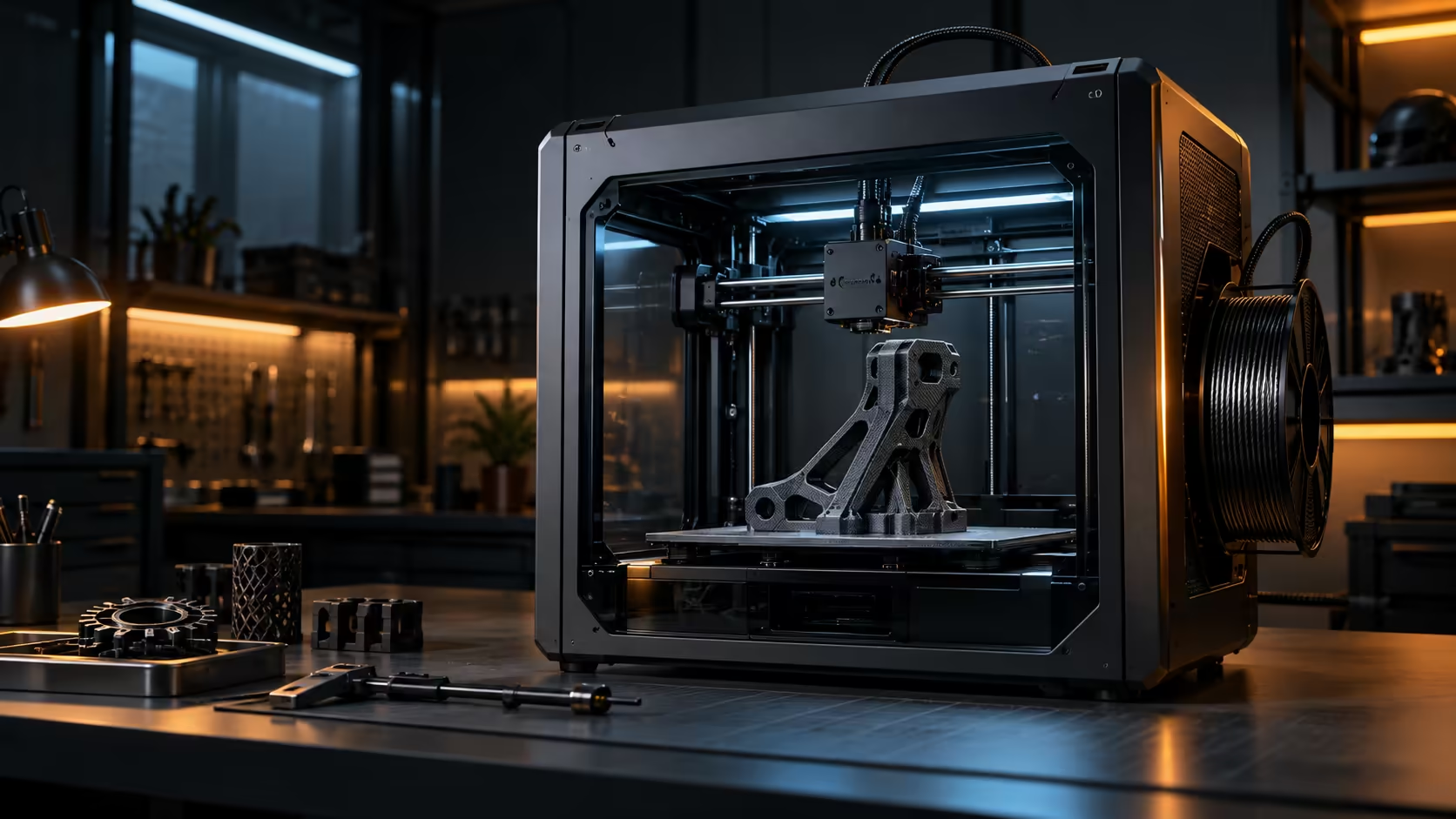
A nozzle built from three different metals sounds like unnecessary complexity until you realise each metal is solving a problem the other two cannot. Tri-metal Unicorn nozzles split one job into three specialised parts rather than compromising on a single material.
Quick Answer
A tri-metal nozzle splits the work three ways: a hard outer face takes the abrasion from fillers like chopped carbon fibre, a conductive core still moves heat efficiently into the plastic, and a smooth internal path stops filled or stiff strands from dragging or catching as they pass through. That combination is what lets the Creality K1C run carbon-fibre filament at 300C reliably, and the printer costs R12,599.
🛡️ The hard outer face: where the wear actually happens
Abrasive filament wears a nozzle from the inside of a 0.4mm orifice outward, and a soft single-metal nozzle offers no real resistance to that process. Placing a genuinely hard material exactly where the filament makes contact addresses the wear at its source, rather than trying to compensate for it elsewhere in the design.
🔥 The conductive core: keeping heat transfer honest
Hardness alone tends to come with a trade-off in how well a metal conducts heat, and a nozzle that resists wear but transfers heat poorly ends up under-melting plastic once flow climbs past 300C worth of demand regardless of how tough it is. Combining a hard outer layer with a more thermally conductive core lets a tri-metal design keep heat moving efficiently into the plastic without giving up the wear resistance the outer surface provides.
🌀 The smooth path: reducing drag on filled filament
Nozzles built specifically for abrasive and filled materials, the general category this style of construction sits within, are often designed with quick, tool-minimal changes in mind, since abrasive printing wears nozzles faster and swapping a worn one quickly keeps a project moving rather than stalling it. A smooth internal geometry also matters on its own, reducing the drag stiffer, fibre-laden strands experience as they travel through, which helps maintain consistent flow rather than letting friction cause intermittent under-extrusion.
Check any specific nozzle's construction details before assuming quick-change convenience is guaranteed, since this varies by manufacturer and model even within similar-sounding product categories. Browse thermal solutions for broader heat management if abrasive printing is part of a larger workshop setup, and stock filament matched to what your specific nozzle construction can actually handle.
Frequently Asked Questions
Why not just make the whole nozzle out of the hardest available metal?
A very hard metal alone often conducts heat poorly, which would limit flow rate; splitting the job across metals balances hardness with heat transfer.
Do tri-metal nozzles wear out eventually too?
Yes, all nozzles are wear parts, though a tri-metal construction typically lasts considerably longer under abrasive use than a single soft metal like brass.
Is quick-change nozzle design common across this category of hardware?
It varies by manufacturer, so check a specific machine's own documentation rather than assuming every nozzle in this general style shares the same swap mechanism.
Does a tri-metal nozzle improve print quality on standard, non-abrasive filaments?
Not particularly, since the wear resistance is unnecessary there; a standard brass nozzle performs just as well for materials like PLA and PETG.
Should I check the exact metals used before buying a tri-metal nozzle?
It is worth doing where the information is published, since "tri-metal" describes a category of construction rather than one fixed recipe, and the specific balance of hardness and conductivity can differ between manufacturers.
Compare that construction against the rest of the 3D printer range before assuming every abrasive-capable listing uses the same internal design or lasts the same number of kilograms under real use.
Printing abrasive filaments and tired of replacing worn nozzles?
Look for a construction that balances hardness with heat transfer, not just one or the other.