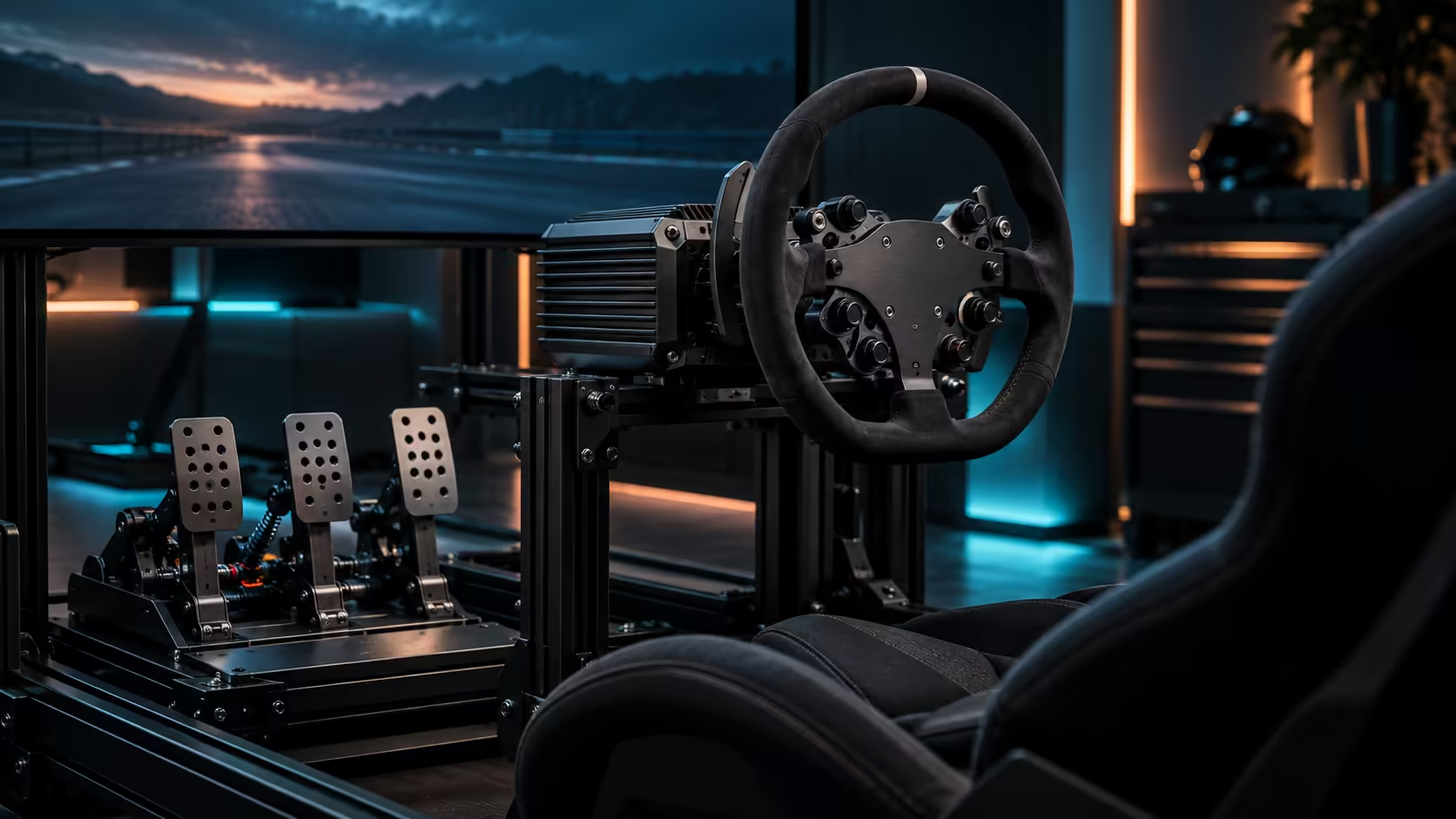
Bundles get marketed on the wheel, because a rim photographs well and a sensor does not, and that is exactly backwards from how the three parts actually earn their keep. A direct drive sim racing bundle worth buying answers three questions in order: how the brake reads your leg, how much torque the base can apply, and what the whole thing is going to bolt to, and only after that does the rim matter at all.
Quick Answer
Check the brake sensor first, the torque figure second, and the mounting requirement last, because in that order each one decides whether the previous purchase was worth it. The R14,999 Green Flag set answers all three at once with a 150kg load cell, a 9Nm Alpha EVO base, and a GT Neo rim that expects to be bolted to something solid rather than clamped to a desk.
🅰️ Brake sensor type comes first
A brake pedal that measures distance travelled rather than force applied runs out of usable range fast, because most of a real brake's stopping power lives in the last few millimetres of pedal travel. A load cell sensor measures pressure instead, which mirrors how braking actually works and gives you a far wider band to find consistent lap-after-lap pressure in.
A 150kg-rated load cell, like the one in the P700 pedal set, is well above what most drivers ever apply, which means the sensor is working in its comfortable middle range rather than at the edge of its capability during normal use. That headroom is what makes fine brake modulation possible rather than an all-or-nothing stab.
🅱️ Torque figure second, and what it should cover
Torque decides how much resistance the base can push back with, and buying below your needs shows up as a wheel that goes light and vague exactly when a car is loading up hardest. Entry bases sit in the low single digits of Newton-metres and suit lighter, lower-downforce driving. A bundle built around 9Nm, like the Alpha EVO base here, covers everything up to and including heavy GT-style cars without the base running out of push mid-corner.
Check whether the figure quoted is peak or continuous, since a base can only sustain its top number for short bursts before heat forces it back. A 9Nm peak with a fast response is worth more in practice than a marginally higher peak on a slower motor.
🅲 What it needs to bolt to, decided before you order
This is the part buyers skip and regret first. Pushing 8Nm or more through a rim demands somewhere genuinely rigid to anchor to, and an ordinary desk built from a thin board on a light frame gives way under that kind of load no matter how good the electronics inside the base are. Work out before ordering whether a stand, a rig, or a heavy desk you can bolt straight through already exists in your setup, because a bundle with nothing solid to sit on performs at a fraction of what it can actually do.
Pedals need the same thought. A load cell brake set resists a hard push rather than moving under it, and an unrestrained pedal plate on a smooth floor will slide during exactly the braking zones you bought the sensor to handle well.
Where you buy the bundle from is worth checking at the same time. A wheel base like this is precision electromechanical hardware, not a disposable peripheral, so a fault down the line can mean 14 to 21 days of real diagnostic work, and a warranty handled by a local seller beats posting a heavy motor back overseas and waiting on someone else's schedule.
Start the comparison itself on the dedicated sim racing page, cross-check torque and sensor figures on the wider racing simulation shelf, and leave the simulation gear range for the mounting hardware once the bundle itself is decided.
Frequently Asked Questions
Which spec matters most if I can only check one thing?
The brake sensor type. A load cell pedal set improves consistent braking more than any wheel base upgrade, because braking accuracy affects every corner on every lap.
Is a higher torque figure always the better buy?
Only if your mount can support it and your sessions are long enough to use the headroom. Torque you cannot mount properly for is wasted, and torque you never need adds cost without benefit.
Can I add the mounting hardware after I buy the bundle?
Yes, but budget for it at the same time rather than after, since a bundle without a rigid mount underperforms until the mount arrives.
Does a higher-rated load cell mean I need to brake harder?
No. A higher rating gives the sensor more usable range in its comfortable middle, often only 60 to 70 percent of the full scale, rather than requiring more force from your leg.
Ready to shop by what actually changes your lap times?
Check the brake sensor, the torque figure, and your mounting plan, in that order, before you compare rims.