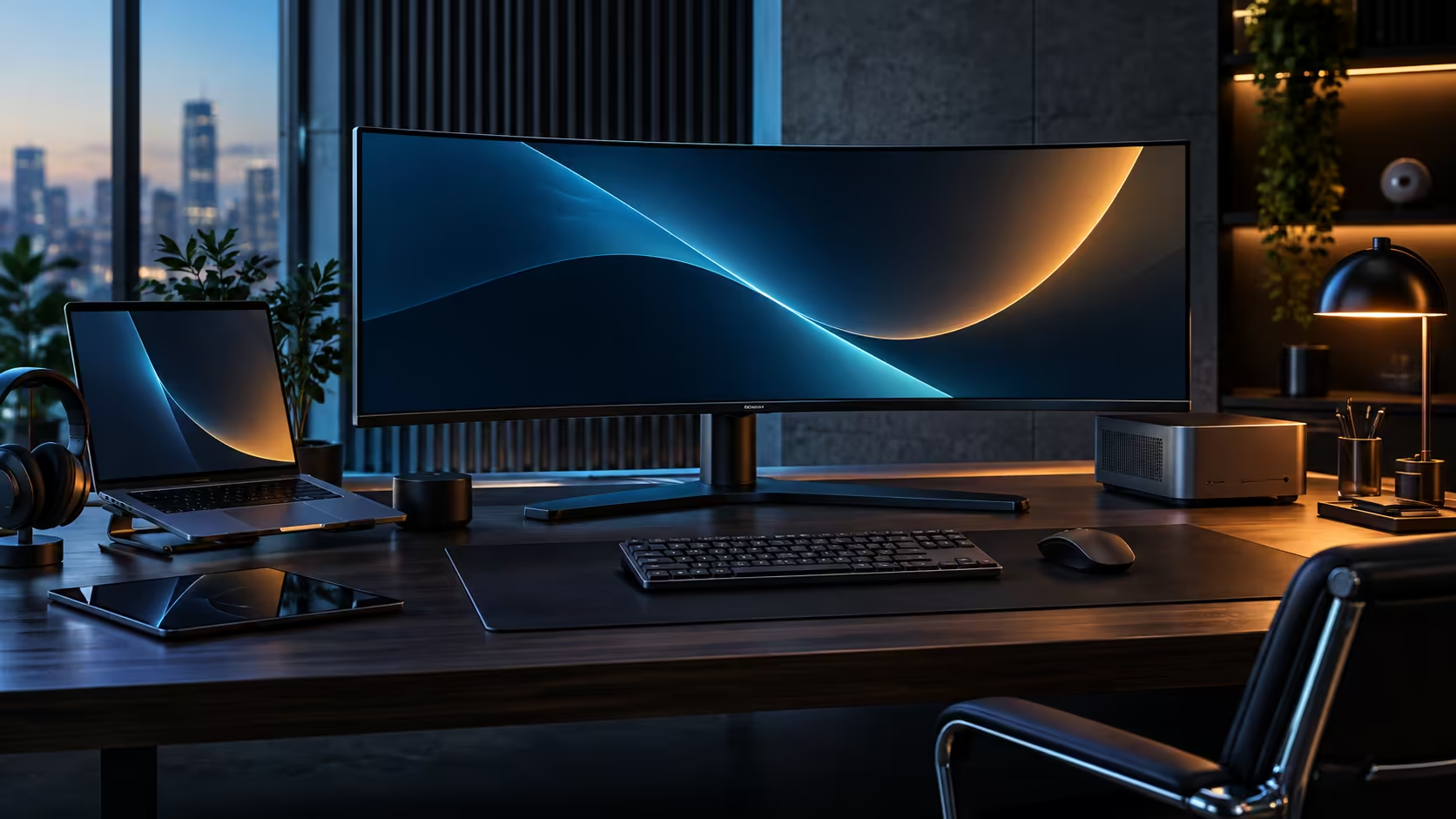
Power delivery numbers get thrown around as if bigger is simply better, which misses the actual question: how many watts does your laptop's own charger provide, and does the monitor beat or fall short of that figure? 90W USB-C covers the vast majority of laptops sold with 45W or 65W bricks, and falls short only on the heaviest machines.
Quick Answer
For any laptop originally sold with a 45W or 65W power brick, 90W from the R7,999 CU34E4CW is comfortably enough to run the machine and top up the battery at the same time. A workstation laptop rated at 140W or beyond keeps charging too, only at a gentler pace than its factory brick would manage, because the monitor simply has no more than 90W to give regardless of how much the laptop is asking for.
🔋 Matching the number to your actual laptop
The brick that came in the box is the number that matters, not a general figure pulled from a spec sheet for a different model.
Flip your laptop's original charger over and read the fine print, since the output figure printed there in watts is the only number worth trusting. Most ultrabooks and general office laptops fall into the 45W or 65W bracket, leaving plenty of the CU34E4CW's 90W budget spare for the keyboard, mouse and camera hanging off the same monitor. A gaming laptop or mobile workstation, by contrast, commonly ships with a charger anywhere from 130W to 240W, and a machine in that bracket simply draws as much as the monitor can hand over, which is usually enough to hold the battery steady in light use but not enough to top it up quickly while gaming or rendering.
If a precise figure matters more than a rough guess, macOS and Windows both report the live charging wattage somewhere in their battery menus, and pulling that number up once is a faster way to confirm the setup is working than watching the percentage climb over twenty minutes.
🖥️ What "enough" actually looks like day to day
A laptop charging slower than its rated maximum is not the same as a laptop not charging at all, and the distinction matters for how you plan a working day.
On a 45W or 65W laptop running typical office software, the CU34E4CW's 90W easily outpaces what the laptop draws even under load, so the battery climbs steadily through the day rather than merely holding steady. On a higher-draw laptop, expect the battery to hold roughly level or gain very slowly during active use, and to charge more meaningfully once the laptop is idle or asleep and drawing far less power itself.
If your laptop is one of the heavier draw machines and you need full-speed charging while docked, its own charger plugged in alongside the monitor connection solves that without giving anything up. For desks with mixed devices, the charger range covers standalone options, and the docking station range is worth comparing if a separate hub with higher wattage suits your setup better than an all-in-one monitor from the office monitor range instead.
Frequently Asked Questions
How do I know how many watts my laptop needs?
Check the label printed on your laptop's original charger. It states the output in watts directly, and that figure is the one to compare against the monitor's charging capacity.
What happens if my laptop's charger is rated higher than 90W?
The laptop will still charge over the monitor's USB-C connection, just at a lower rate than its original charger provides. It will not damage the laptop or the monitor.
Can I use my laptop's own charger at the same time as the monitor's USB-C cable?
Yes. Plugging in the original charger alongside the monitor connection gives you the full rated charging speed if 90W is not enough for your machine.
Does 90W leave enough power for the monitor's other USB ports?
Yes, the 90W figure is specifically for laptop charging. The monitor's own USB hub and peripherals draw power separately and do not compete with that budget.
Will a 90W monitor overcharge or damage my laptop's battery?
No. Laptop charging circuits regulate how much power they draw regardless of what the source can supply, so a higher-capacity source is not a risk to the battery.
Ready to check whether 90W covers your laptop?
Look at the wattage on your current charger, then compare it against what a docking monitor can deliver.