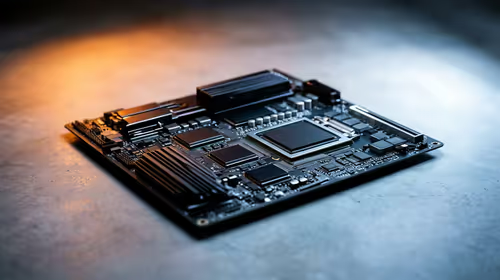
Is your trusty Lenovo gaming laptop starting to feel a bit... sluggish? Before you start pricing out a brand-new rig that costs thousands of ZAR, consider a simpler, more affordable path. A strategic Lenovo gaming laptop upgrade can breathe new life into your machine, boosting frame rates and slashing loading times for a fraction of the cost. This guide will walk you through the most impactful upgrades you can perform right here in South Africa. 🚀
Why Consider a Lenovo Gaming Laptop Upgrade?
The beauty of a gaming laptop lies in its potential. While the CPU and GPU are typically soldered to the motherboard, two key components are often user-accessible: the RAM (memory) and the SSD (storage). Upgrading these parts is one of the most cost-effective ways to enhance performance.
For a few hundred Rand, a RAM upgrade can make multitasking smoother and stop games from stuttering. For a bit more, a new SSD can make your entire system feel brand new, with lightning-fast boot times and near-instant game loading. A successful Lenovo gaming laptop upgrade means getting more performance from the hardware you already own.
The Pre-Upgrade Checklist 🔧
Before you unscrew a single panel, a little prep work is essential. Rushing this step can lead to frustration or even damage.
- Check Your Warranty: Opening your laptop might void your warranty. If your machine is still under warranty, weigh the performance gains against this risk.
- Confirm Compatibility: This is crucial. Not all RAM or SSDs will work with your specific model. Use a tool like Crucial's System Scanner or check your laptop's official spec sheet to find out the type, speed, and maximum capacity it supports. You can also get a good idea by looking at the components used across the full range of Lenovo gaming laptops to see what's standard.
- Gather Your Tools: You'll need a small Phillips-head screwdriver, a plastic pry tool (an old credit card can work in a pinch), and an anti-static wrist strap to protect your components from static discharge.
- Back Up Your Data: Before you change any hardware, back up your important files to an external drive or cloud service. Better safe than sorry!
Step-by-Step Upgrade Guide: RAM & SSD
Alright, let's get to the main event. This section covers the two most common and impactful upgrades. Remember to power down, unplug, and hold the power button for a few seconds to discharge any residual electricity before you begin.
Upgrading Your RAM (Memory)
A RAM upgrade is often the easiest Lenovo gaming laptop upgrade you can do. More RAM allows your system to handle more tasks at once, which is perfect for gamers who stream or keep Discord and browser tabs open while playing.
- Open the Case: Place your laptop upside down on a soft, non-conductive surface. Carefully remove the screws from the bottom panel and use a plastic pry tool to gently unclip it.
- Locate the RAM: The RAM modules are small green circuit boards held in place by metal clips on either side.
- Remove Old Modules: Gently push the clips outward. The RAM stick will pop up at an angle. You can then pull it out of the slot.
- Install New Modules: Align the notch on your new RAM stick with the notch in the slot. Insert it at the same 45-degree angle and press down firmly until the clips on both sides snap into place.
- Close Up: Re-attach the bottom panel, screw it back in, and power on your machine. Your system should automatically detect the new memory.
Cloning Your Drive Made Easy ✨
When upgrading your main drive, you don't have to reinstall Windows from scratch. Use free software like Macrium Reflect or Clonezilla to create an exact copy (a "clone") of your old drive onto the new one. Once cloned, you can swap the drives, and your laptop will boot up exactly as it was before, just much, much faster!
Installing a New SSD (Storage)
Upgrading from a traditional hard drive (HDD) to a Solid-State Drive (SSD), or adding a second NVMe SSD, provides the most noticeable performance boost.
- Open the Case: Follow the same procedure as the RAM upgrade to access the laptop's internals.
- Locate the SSD Slot: Find the existing drive or the empty M.2 slot (it's a small slot, usually labelled "SSD").
- Install the Drive: If replacing a drive, remove the single screw holding it in place, pull it out, and insert the new one. If adding a new drive, simply slide the NVMe SSD into the M.2 slot at a slight angle and secure it with the mounting screw.
- Close & Configure: Reassemble your laptop. If you cloned your old drive, you're good to go! If you installed a fresh drive, you'll need to install Windows and your games.
When Is a New Laptop the Better Choice?
An upgrade is fantastic, but it can't fix everything. If your core problem is an underpowered CPU or an outdated GPU that can't keep up with modern titles, a RAM or SSD upgrade will only provide a minor improvement.
This is where you need to be honest about your machine's limits. If your older Lenovo IdeaPad 3 Gaming model is struggling with its core graphics, no amount of RAM will fix that. In this case, it might be time to look at the sheer power offered by the latest Lenovo Legion gaming laptop deals, which feature top-tier GPUs and processors. For those seeking a powerful but budget-conscious modern option, the new Lenovo LOQ gaming laptops strike an incredible balance of price and performance.
Ultimately, a Lenovo gaming laptop upgrade is perfect for extending the life of a capable but aging machine. But for a true next-gen leap, a new system is the only way forward.
Ready for a Serious Performance Boost?
A DIY upgrade can be a rewarding, cost-effective way to get more from your machine. But if your core components are holding you back, it might be time for a new powerhouse. Explore our massive range of laptop specials and find the perfect rig to conquer your world.