Building a new PC rig in South Africa? You've seen the hype around PCIe 5.0, promising lightning-fast speeds for your graphics card and SSD. But with every Rand counting, the real question is simple: is the performance jump from PCIe 4.0 genuinely worth the extra cash right now? Let's settle the PCIe 5.0 vs 4.0 debate and help you decide if this is an upgrade that makes sense for your next build. 🚀
The Core Difference: What is PCIe 5.0 vs 4.0?
Think of Peripheral Component Interconnect Express (PCIe) as the super-highway inside your PC. It connects your most important components—like your graphics card and NVMe SSD—to your motherboard and CPU. Each new generation effectively doubles the speed of the previous one.
In simple terms:
- PCIe 4.0: Offers a maximum bandwidth of roughly 32 GB/s on the main x16 slot used for graphics cards.
- PCIe 5.0: Doubles that to a massive 64 GB/s on the same x16 slot.
This huge leap in theoretical speed is impressive, but does it translate to real-world performance gains for the average South African gamer or creator?
Where PCIe 5.0 Speed Actually Matters (and Where It Doesn't)
The PCIe 5.0 vs 4.0 discussion isn't just about numbers; it's about practical application. Right now, the benefits are concentrated in one key area.
For Your Graphics Card 🎮
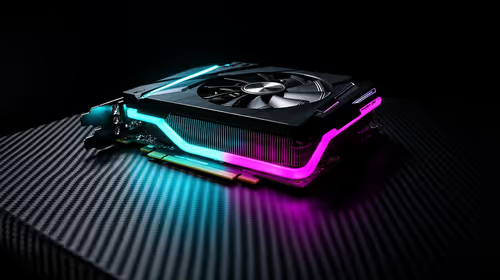
Here’s the surprising truth: for gaming, the difference between PCIe 5.0 and 4.0 is almost non-existent. Even the mighty NVIDIA GeForce RTX 4090, the most powerful consumer GPU on the market, doesn't fully saturate a PCIe 4.0 x16 slot. In gaming benchmarks, the performance difference is typically within the margin of error, often just 1-2%. So, if your primary concern is frames-per-second, a PCIe 5.0 slot for your GPU is currently more of a future-proofing feature than a necessary performance uplift.
For Your Storage (NVMe SSDs) ⚡
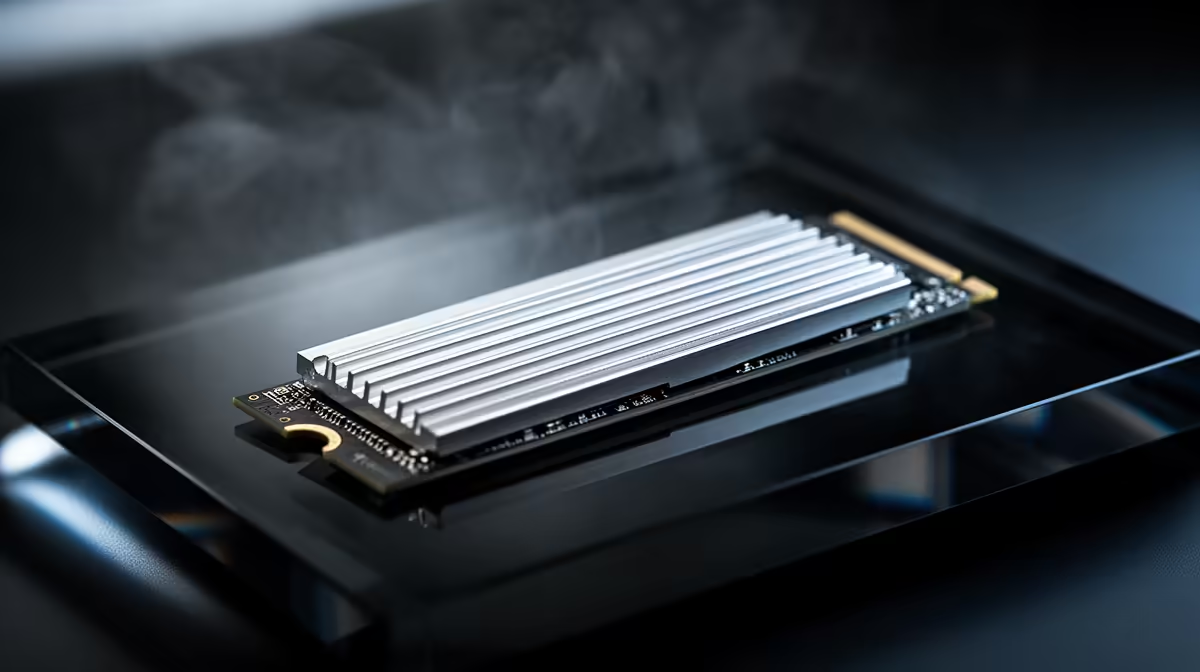
This is where PCIe 5.0 truly flexes its muscles. A PCIe 5.0 NVMe SSD can achieve breathtaking sequential read and write speeds, often exceeding 10,000 MB/s. This is double what the fastest PCIe 4.0 drives can manage.
What does this mean for you?
- Faster Game Loading: Drastically reduced loading screens in titles that support future storage technologies.
- Quicker File Transfers: Moving massive video files or game folders takes seconds, not minutes.
- Smoother Content Creation: Video editors and 3D artists will see a significant boost when scrubbing through high-resolution timelines and working with large assets.
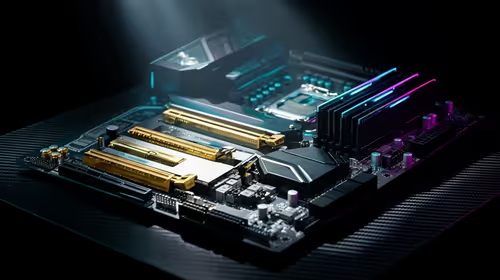
To take advantage of this, you'll need a motherboard that supports the new standard. For Team Red fans, this means looking at the latest generation of AMD motherboards built on the AM5 platform.
Check The Fine Print! 🔧
Always read a motherboard's spec sheet carefully before buying. Some boards might offer a PCIe 5.0 slot for the graphics card but only provide PCIe 4.0 lanes for the M.2 SSD slots, or vice-versa. Knowing the exact configuration helps you match components perfectly and avoid disappointment.
The South African Cost Factor: Is PCIe 5.0 Worth the Price?
For most of us building a PC in SA, budget is a major factor. The move to PCIe 5.0 isn't just about buying one component; it requires a new platform, which can get pricey.
A full PCIe 5.0 setup requires:
- A PCIe 5.0-Ready CPU: Like AMD's Ryzen 7000 series or Intel's 12th Gen or newer processors.
- A Compatible Motherboard: These boards often carry a premium over their PCIe 4.0 counterparts. For Team Blue, you'll need to shop from the latest range of Intel motherboards to get this feature.
- A PCIe 5.0 NVMe SSD: These drives are currently the most expensive consumer SSDs on the market.
When you add it all up, the cost of going all-in on PCIe 5.0 can be significantly higher than building a top-tier PCIe 4.0 system that delivers nearly identical gaming performance.
The Verdict: Future-Proofing vs. Smart Spending
So, is the PCIe 5.0 upgrade worth it for South Africans today? Here’s our take.
- For Most Gamers: No. PCIe 4.0 is the undisputed sweet spot. It provides more than enough bandwidth for today's best graphics cards and allows for incredibly fast SSDs that will make your system feel snappy and responsive. You can build a powerhouse rig using a wide selection of cheap Intel & AMD based motherboards and invest the money you save into a better GPU or a larger SSD... a much smarter use of your budget.
- For Elite Content Creators & Bleeding-Edge Enthusiasts: Maybe. If your work involves constantly moving and manipulating massive files (e.g., 8K video editing) or you simply must have the absolute fastest hardware available and budget isn't a concern, then PCIe 5.0 offers a tangible benefit for storage speeds. It's a choice for those who want to be on the cutting edge of technology.
For everyone else, the PCIe 5.0 or 4.0 choice is clear. Stick with PCIe 4.0 for now. It offers fantastic performance and incredible value, letting you build a killer machine without breaking the bank.
Ready to Build Your Perfect Rig?
The PCIe 5.0 vs 4.0 debate is all about finding the right balance for your budget and needs. For maximum gaming performance and value in South Africa, a powerful PCIe 4.0 build is tough to beat. Explore our massive range of PC components and find the perfect parts to conquer your world.