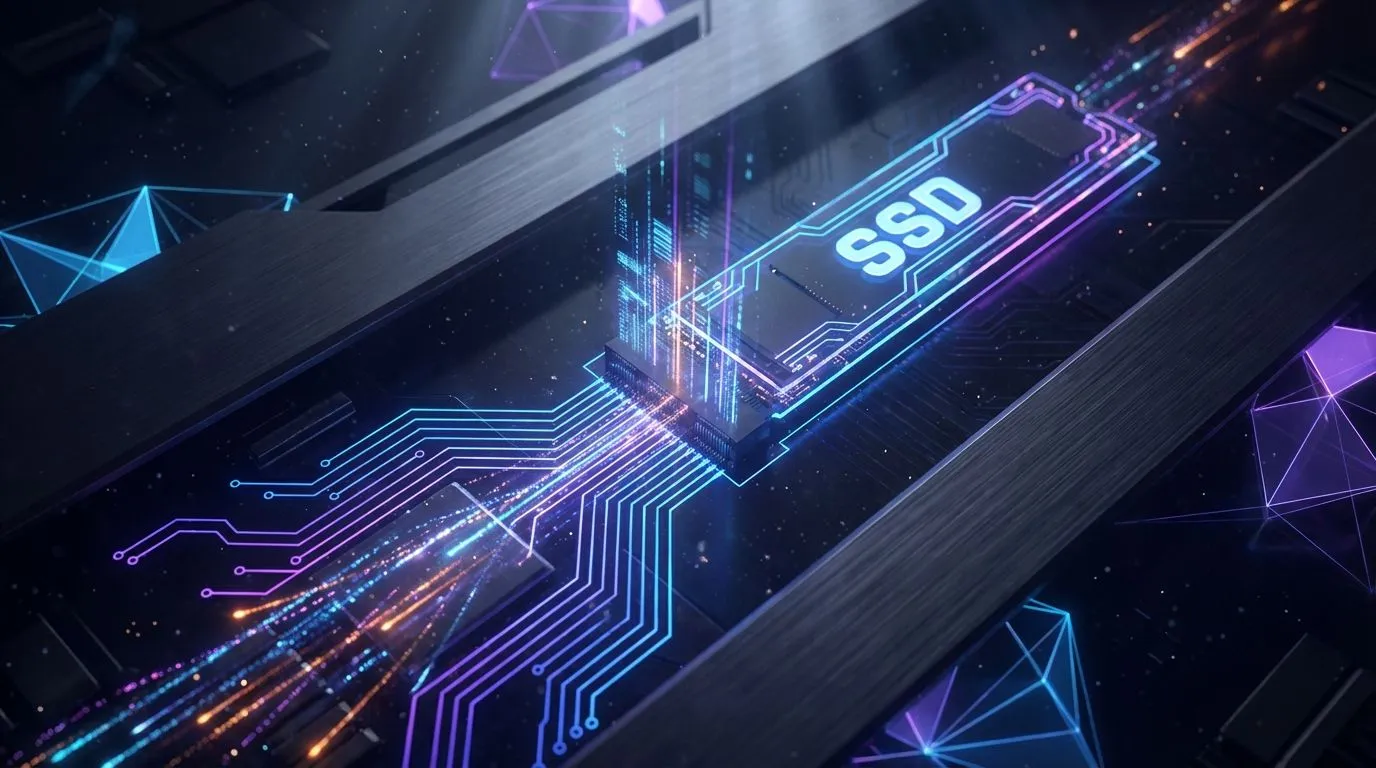
The promise of PCIe Gen 5 SSDs is intoxicating... think near-instant load times and data transfers so fast you'll blink and miss them. Next-generation drives are set to redefine speed for gaming and content creation. But before you get ready to drop some serious ZAR on an upgrade, there's a crucial question every South African gamer needs to ask: is my PC actually ready for it? Let's break down the essentials of PCIe Gen 5 SSD compatibility.
Understanding the Core Requirements for Gen 5 SSDs
Jumping to a Gen 5 NVMe SSD isn't a simple plug-and-play affair like older storage. True PCIe Gen 5 SSD compatibility rests on a modern foundation, and the two most important components are your CPU and your motherboard. Without both of these speaking the same high-speed language, your brand-new drive will be severely bottlenecked... or won't work at all.
Your PC needs a processor that supports PCIe 5.0 lanes directly. This means you're looking at:
- Intel: 12th Gen Core (Alder Lake) or newer.
- AMD: Ryzen 7000 Series (Zen 4) or newer.
If your CPU is older than these, a Gen 5 upgrade is off the table until you upgrade your platform.
Checking Your Motherboard for Gen 5 Compatibility
Even with the right CPU, the motherboard is the ultimate gatekeeper. It must have a dedicated M.2 slot that is physically and electronically wired for PCIe 5.0 speeds.
How can you check? Look at your motherboard's official specifications page online. You're searching for a feature listed as "PCIe 5.0 x4 M.2 Slot". Many high-end boards based on Intel Z690/Z790 or AMD X670/B650 chipsets include one, but it's never a guarantee on mid-range or budget models. If your board only offers PCIe 4.0 slots, don't stress. You can still get incredible performance from a lightning-fast Gen 4 drive like the Klevv CRAS C925G, which offers phenomenal value for gamers right now.
BIOS Check-Up 🔧
After installing any new NVMe SSD, boot into your PC's BIOS UEFI. Find the storage or NVMe configuration settings and ensure the M.2 slot is set to run at its maximum available speed (e.g., "Gen 5" or "x4 mode"). Sometimes, motherboards default to a slower, more compatible setting, leaving performance on the table!
More Than Just a Slot: Cooling and Setup for Gen 5 SSDs
With great speed comes great heat. 🔥 PCIe Gen 5 SSDs run significantly hotter than their predecessors due to the sheer amount of data they're processing. Without proper cooling, they can "throttle" – intentionally slowing down to prevent overheating, which completely defeats the purpose of your upgrade.
Ensure your motherboard's M.2 slot has a thick, effective heatsink. Many performance-oriented motherboards come with them pre-installed. If yours doesn't, or if it looks a bit flimsy, consider an aftermarket M.2 cooler. Investing in quality cooling from components by trusted brands like Klevv ensures you get the sustained performance you paid for, especially during long gaming sessions or while transferring massive files.
The Verdict: Should You Go Gen 5 Today?
So, is your PC ready for a drive like the WD SN8100 or its successors?
If you have a latest-generation Intel or AMD platform with a designated PCIe 5.0 M.2 slot, then yes, your hardware has the right stuff. This upgrade path is for the enthusiast building a top-tier machine who wants to be on the cutting edge.
However, for the majority of South African gamers, a high-quality Gen 4 SSD remains the undisputed champion of price-to-performance. The real-world difference in game load times is still small, and you can get incredible speed for a much friendlier price. Before you make a decision, it's always a good idea to explore our full range of SSDs to see what makes the most sense for your budget and your rig.
Ready to Obliterate Your Load Times? 🚀 Whether you're building a future-proof Gen 5 beast or optimising your current rig with a killer Gen 4 deal, the right storage is key. A faster SSD means less waiting and more gaming. Browse our massive range of SSD deals and give your PC the speed boost it deserves.