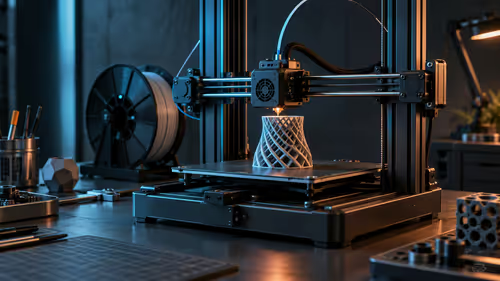
A fast printer and a difficult material do not always want the same thing, and buying purely for the speed rating on the box can leave you with a machine that fights every TPU, ABS or ASA project you actually wanted it for. High-speed 3D printing and these three specific materials pull in different directions, and knowing which one matters more before you buy avoids the mismatch.
Quick Answer
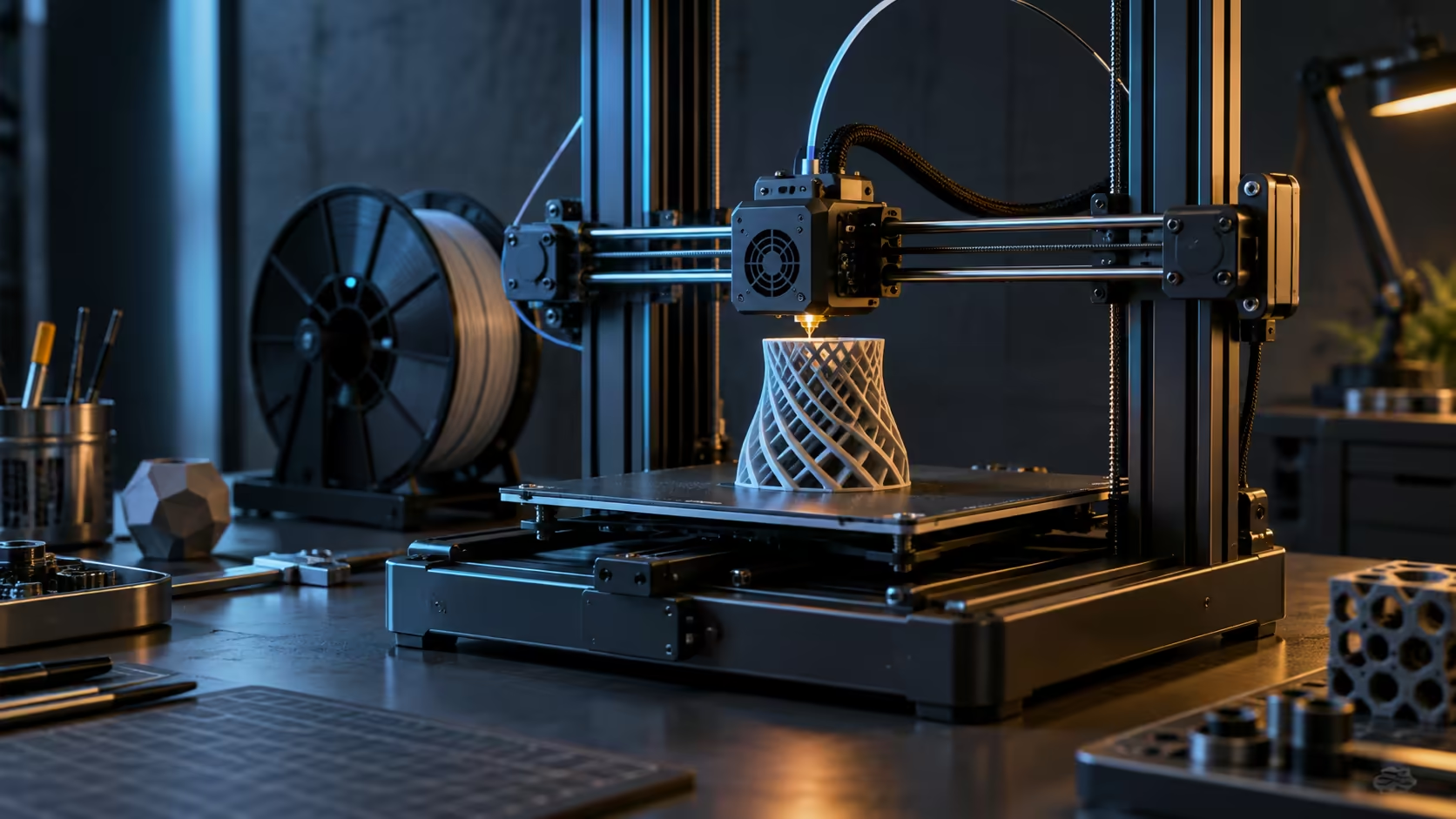
Speed and difficult materials genuinely pull in opposite directions. ABS and ASA want still, warm air rather than a fast-moving toolhead stirring up draughts, while flexible filament wants a slow feed rate and a very short path rather than raw speed at all. Buy for the extruder type and the nozzle ceiling first: the R5,799 Ender-3 V3 KE brings a 300C head and Sprite direct drive as the foundation, with speed as a bonus on top rather than the main event.
⚡ Why speed and difficult materials are not the same shopping list
A headline speed rating describes how fast the motion system can move, and marketing understandably leads with it because it is the easiest number to compare between machines. But TPU, ABS and ASA each have their own specific requirement that has nothing to do with motion speed, which means a printer chosen purely for a fast rating can still handle all three poorly if the extruder layout and nozzle ceiling behind that speed were an afterthought.
Buying for these three materials specifically means checking a different part of the specification sheet than the one most listings put first, which is exactly the comparison worth making across the 3D printer range rather than sorting by top speed.
🪢 TPU wants slow and short, the opposite of a speed pitch
Flexible filament buckles when pushed through a long, unsupported feed path, which is a mechanical problem a fast motion system does nothing to solve. What actually matters is a short, direct feed path under 50mm, the kind a direct drive extruder provides by mounting its motor right above the hotend, combined with a print speed of 15mm/s to 30mm/s rather than whatever the machine's top rating would suggest.
A printer marketed heavily on speed but built around a long Bowden tube is a genuinely poor match for TPU regardless of how fast its motors can move. TPU 95A is the hardness named on the Ender-3 V3 KE's own material list, and checking for that same level of detail on any machine you are comparing it against beats assuming a fast rating implies good flexible material handling generally.
🌡️ ABS and ASA want still air, not a fast-moving toolhead
Both materials shrink as they cool from around 250C, and uneven cooling, usually from a draught reaching one side of a print more than another, is what pulls corners up and causes warping or, in ASA's case, layers separating from each other. A fast-printing environment with an open frame and active airflow around the print area works against this rather than for it, since ABS and ASA specifically want steady, warm, still air rather than anything moving quickly nearby.
This does not mean a fast printer cannot print these materials well, but it does mean the fix for warping has nothing to do with the printer's speed rating and everything to do with draught control, bed temperature, and, where practical, boxing the print area in to hold ambient heat steady.
🛒 What to actually prioritise when buying for these three materials
Check extruder type first, since it decides whether TPU is realistic at all, then check the nozzle's maximum temperature, since ASA specifically needs to sit close to the top of its own range and a low-ceiling nozzle leaves little margin. Speed matters least of the three for these particular materials, and it is worth treating as a nice-to-have once the other two are settled rather than the deciding factor.
Stock up on filament for whichever of these three materials your project actually needs, and confirm it is available locally rather than betting on a nozzle rating alone while an overseas order sits waiting to clear customs. Warranty support matters here too, since TPU, ABS and ASA all ask more of an extruder than PLA does, and a fault is worth a quick local fix rather than a long wait. Where a fully cured, highly detailed finish matters more than anything TPU, ABS or ASA can deliver, look at the resin range instead, since it solves a different problem with its own separate process entirely.
Frequently Asked Questions
Should I ignore speed entirely when buying for TPU, ABS or ASA?
Not entirely, since speed is still useful for other prints, but do not let it override extruder type and nozzle ceiling, which matter far more for these three specific materials.
Does a fast printer make ABS warping worse?
Not the speed rating itself, but an open frame with active airflow near the print, which sometimes accompanies fast machines, can make draught-related warping more likely.
Is direct drive strictly required for TPU?
Not strictly, but it removes the main mechanical obstacle, and a Bowden setup needs considerably more careful tuning to achieve a similar result.
What nozzle temperature should I look for if ASA is a priority?
A ceiling of at least 300C gives comfortable headroom above ASA's typical printing range, which sits close to 255C, rather than leaving little margin above a lower-rated nozzle.
Can one printer realistically handle all three of these materials well?
Yes, provided it has direct drive extrusion and a sufficiently high nozzle ceiling. Speed rating has little bearing on whether all three are achievable on the same machine.
Ready to buy for the materials you actually want to print, not just the speed rating?
Check extruder type and nozzle ceiling first, and treat speed as a bonus once those two are settled.