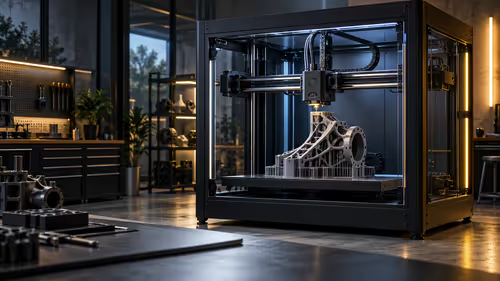
A rand figure on its own tells you nothing about what a printer will actually do for you. How much to spend on a fast 3D printer comes down to which features that spend actually buys, not the number itself, since two machines at wildly different prices can print the exact same object equally well if the cheaper one happens to get the right four things right.
Quick Answer
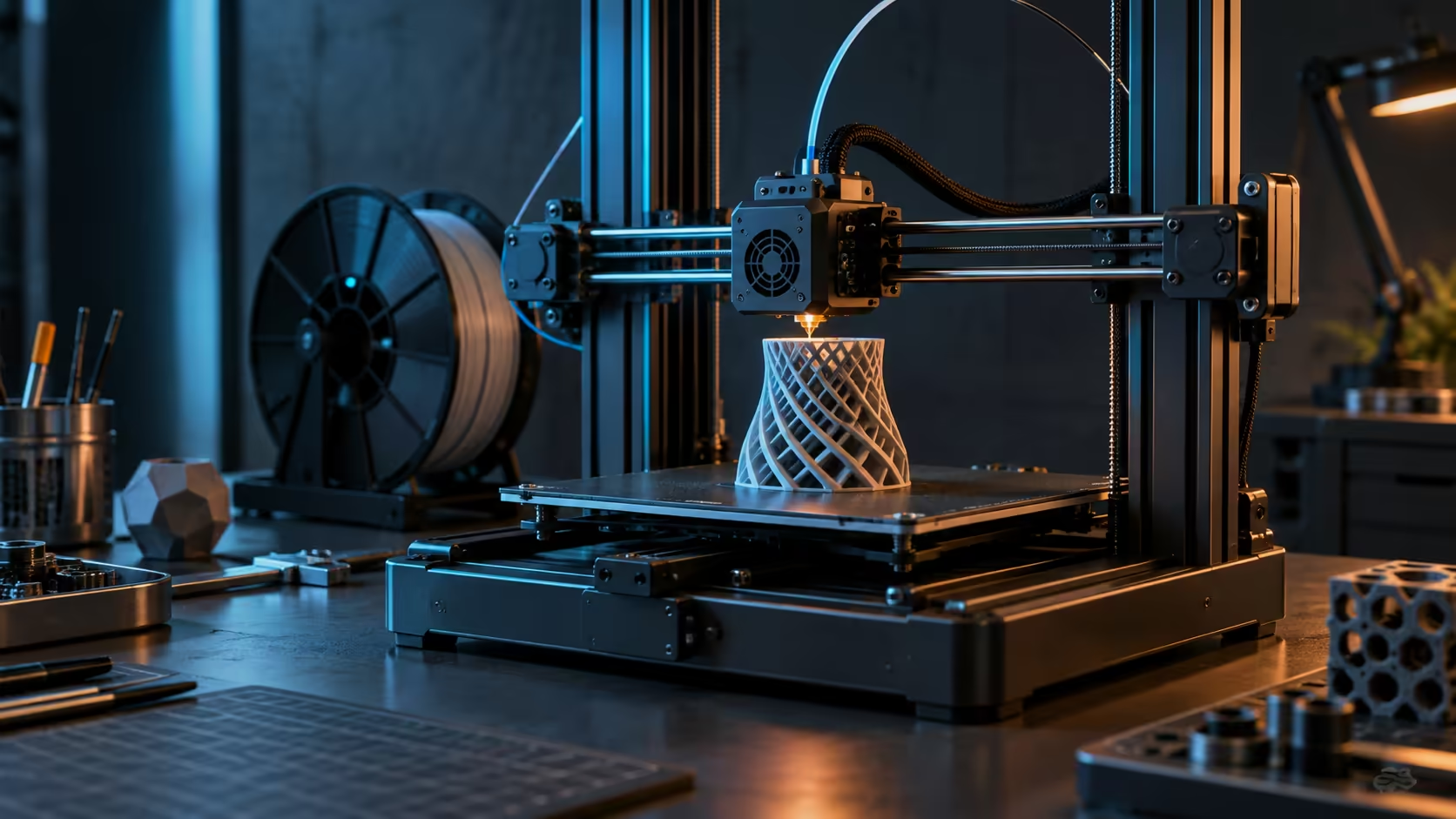
Budget by features, not by speed alone: extruder type, levelling system, nozzle temperature ceiling and build area. Those four decide whether a given evening ends with a finished part or an hour of troubleshooting. The Ender-3 V3 KE gathers all four at R5,799, which is a fair yardstick for what a fast local machine should reasonably cost.
💰 What a very cheap machine actually costs you later
A printer priced well below a fair local yardstick usually gets there by cutting one or more of the four features that matter most: a Bowden extruder instead of direct drive, manual four-corner levelling instead of an auto-probe, a lower nozzle ceiling that shuts out ASA and hotter materials, or a smaller build area than the price would suggest elsewhere. None of those cuts are fatal on their own, but stacked together they turn ordinary printing into a slower, more failure-prone routine.
The real cost shows up in wasted filament and wasted evenings rather than on the receipt, since a machine with weaker levelling fails more first layers, and a machine without direct drive rules out flexible filament from the start rather than merely making it harder. Scanning the 3D printer range with these four cuts in mind is a better filter than sorting by price alone.
🎯 What the R5,799 yardstick actually bundles together
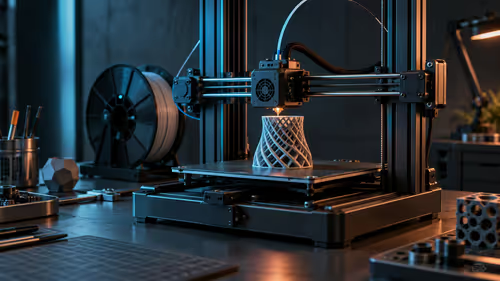
At this price point, a fair local machine should include direct drive extrusion, auto levelling that removes the manual four-corner routine, a nozzle ceiling of at least 300C for material headroom, and a build area generous enough for most household and hobby projects without constant splitting. The Ender-3 V3 KE meets that bar with a 220 x 220 x 240mm bed alongside all three other features, which is why it is a reasonable reference point when judging whether a cheaper or more expensive alternative is actually a better deal or just a different price.
📈 What spending more actually adds beyond this point
Above this yardstick, extra spend typically buys a bigger build volume for large single-piece projects, an enclosed chamber that helps ABS and ASA resist warping without extra ventilation planning, or a CoreXY motion system capable of significantly higher sustained speeds than a standard gantry design. Each of these is a genuine upgrade for someone with a specific need, large parts, difficult materials in volume, or serious throughput, but none of them fixes a problem the R5,799 tier does not already have if your projects are ordinary household and hobby work.
Spend on these extras deliberately, matched to an actual recurring need, rather than as a general assumption that more expensive automatically means better for your specific printing.
🇿🇦 Why a ZAR price from a local seller is worth more than it looks
A cheaper machine sourced from an overseas listing can look like a bargain until duty, courier charges and a multi-week wait are added to the true cost, and warranty support for a fault becomes a long, difficult process with a seller on the other side of the world rather than a straightforward local exchange. For a machine you plan to actually use regularly rather than admire in a box, that support difference matters as much as the headline price.
Confirm that filament in the materials and colours you want is stocked locally before committing to any printer, since a machine with no accessible filament supply is a worse deal than a slightly pricier one backed by an actual local range. Judge an Elegoo machine or any other brand on this same local-support footing rather than on the sticker price alone.
Frequently Asked Questions
Is a printer significantly cheaper than R5,799 always a bad deal?
Not always, but check carefully which of the four core features it has cut to hit that price, since a missing feature usually costs more in wasted evenings than it saved upfront.
When is it worth paying significantly more than this yardstick?
When a specific, recurring need justifies it: consistently large parts, heavy use of materials that need an enclosure, or genuine throughput demands beyond hobby-level printing.
Does a bigger build volume automatically justify a higher price?
Only if your projects regularly need it. Most household and hobby printing fits comfortably within a 220 x 220 x 240mm bed without the extra cost of a larger machine.
Is buying an imported "bargain" printer ever worth the risk?
It can work out, but factor in duty, courier delays and how difficult warranty support becomes with an overseas seller before comparing the sticker price directly against a local option.
What is the single biggest feature to avoid cutting on a budget?
Auto levelling and a reasonable nozzle ceiling tend to affect day-to-day reliability the most, so they are worth protecting even if the build area or extruder type gets adjusted to hit a target price.
Ready to spend based on features rather than a headline number?
Check extruder, levelling, nozzle ceiling and build area against the price before deciding a machine is genuinely a bargain.