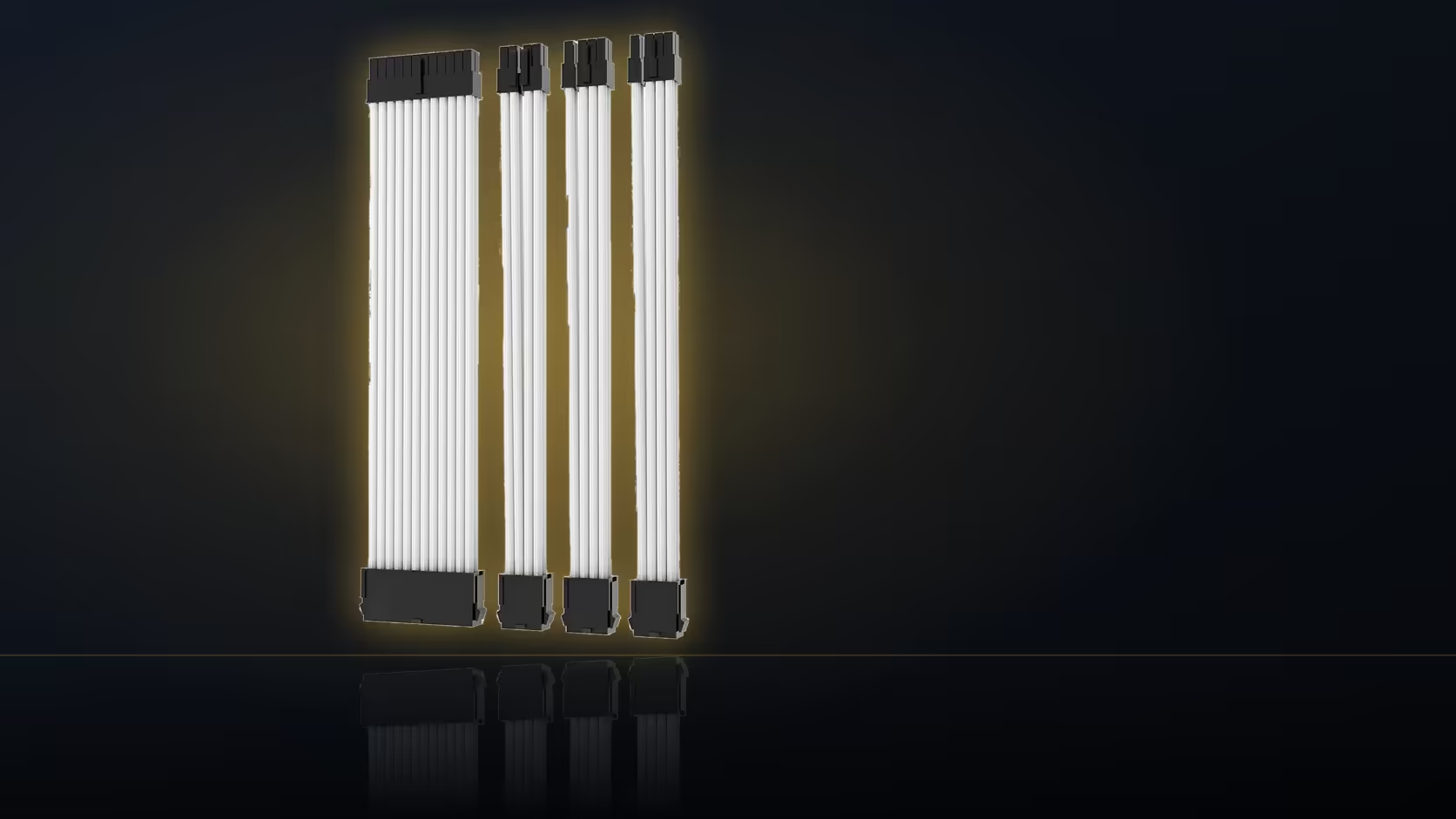
Boxing up the unused extensions from a partial kit install feels like a two-minute job, right up until you rediscover the box six months later and cannot tell an EPS lead from a PCIe lead by looking at them. A few seconds of labelling now saves that exact confusion later.
Quick Answer
Mark the unused pieces by connector role before they go back in the box. An EPS lead and a PCIe lead are hard to tell apart later. The split is the giveaway: four and four against six and two.
🔍 The fastest way to identify a spare
Look at how the plug itself divides rather than trying to remember which piece was which. Four pins and four pins means the processor lead; six pins and two pins means a graphics lead. That split pattern is essentially the only feature distinguishing the pieces from each other at a glance, since everything else about them - length, sleeving, general shape - looks nearly identical.
🎨 Why colour will not help you later
Within a single kit, every piece shares the exact same finish, so sleeving colour offers no way to tell an EPS lead from a PCIe lead when they came from the same box - colour only distinguishes pieces that originated from entirely different kits. Do not rely on "the gold one" or "the black one" as an identifying feature for spares from a single-finish purchase; it will not work.
🏷️ What a useful label actually says
A label does not need to be elaborate. A short note reading something like "CPU four plus four" is enough to settle the identification instantly without needing to handle or inspect the lead again later. Recording the connector role and its pin split is the entire job - anything more is unnecessary detail that adds effort without adding clarity.
📦 Storage that actually protects the cable
A small labelled zip bag does more for spare cable care than most builders give it credit for, keeping loose strands from snagging on other stored parts and stopping connectors from picking up dust that later has to be cleaned out before fitting. It costs almost nothing and takes seconds, which makes it an easy habit to build into every leftover-parts drawer in the workshop or garage, right alongside the spare screws and stand-offs every build seems to accumulate over the years, none of which ever quite get thrown away either, no matter how many builds come and go through the same workshop over the years. Keep spares with the original kit box if you still have it, stored somewhere dry and reasonably flat so the braided sleeving does not take on a permanent kink from being folded too tightly for an extended period. As passive cables with no active electronics, spare extensions do not meaningfully deteriorate simply from the passage of time - crushing and sharp, tight folds do far more damage than age ever will on their own. Holding onto the original packaging is worth doing too, since it keeps the pieces physically together and usually still carries a printed contents list, which is a handy reference if labels ever come loose or go missing. There is no real deadline on how long to keep an unused extension either - a future card upgrade or a board swap can put a boxed lead to genuine use years after the original install, long after the details would otherwise have been forgotten. These spares belong to the range at cable solutions, and a future rebuild wanting something beyond extensions can look at individually sleeved premium cables when that day comes.
Frequently Asked Questions
What is the quickest way to identify a spare piece?
Look at how the plug divides. Four and four means the processor lead, six and two means a graphics lead. Nothing else distinguishes them at a glance.
Does the sleeving help identify them?
Not within one kit, since every piece shares the same finish. Colour only separates pieces that came from different boxes.
What should a label actually say?
The connector role and the split, so a note reading CPU four plus four is enough to settle it without handling the lead again.
Where is the best place to keep spares?
With the kit box if you still have it, somewhere dry and flat so the braid does not take a permanent kink from being folded tight.
Do spare leads deteriorate in storage?
They are passive cables, so time alone does little. Crushing and sharp folds do more harm than age ever will.
Is it worth keeping the packaging?
It keeps the pieces together and usually carries the contents list, which is a useful reference if labels come adrift.
How long should I keep an unused extension?
As long as the build lives. A card upgrade or a board change can put a boxed lead to work years after the original install.
Sorting out spare cable extensions from a past build?
Check Evetech's power supply range if a future upgrade means those spares are finally about to be useful.