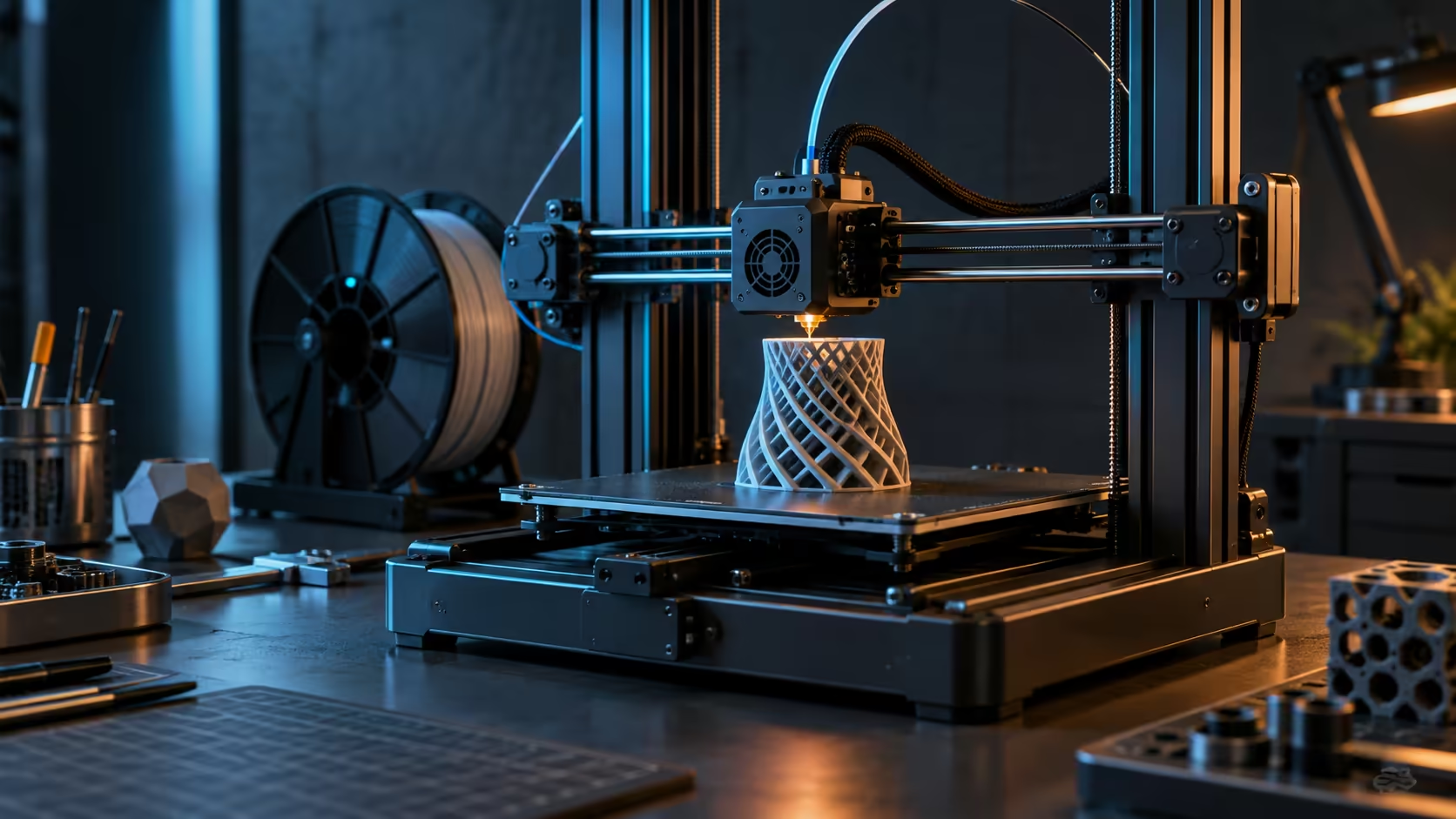
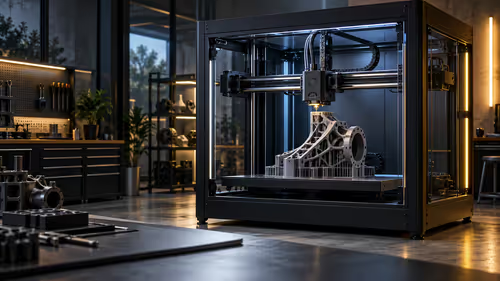
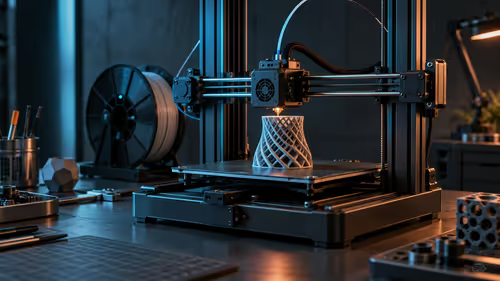
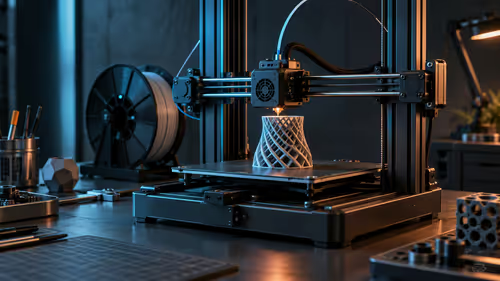
Most first-printer regret has nothing to do with the machine itself and everything to do with four practical questions nobody thinks to ask before the box arrives. A first 3D printer needs a home, a noise tolerance, a plan for keeping filament dry, and someone to call when something inevitably goes wrong while you are still learning.
Quick Answer
Settle four practical things before reading a single specification list: where it will actually stand, how loud it gets, how filament stays dry, and who repairs it when it fails. The 220 x 220 x 240mm Ender-3 V3 KE answers the first question at R5,799 by needing roughly half a square metre of genuinely free space, once cabling and the spool holder are accounted for.
📍 Where it will actually stand
Half a square metre sounds small until you try to find a spot that is also near a plug, clear of curtains or paper that could catch stray heat, and not directly under something that will drip or get bumped. A dedicated corner of a desk works better than a shared middle section, since a printer running for hours needs to be left alone rather than nudged every time someone reaches past it for something else. Actual footprints vary across the 3D printer range, so measure a specific listing rather than assuming from the bed size alone.
Ventilation matters here too, even for a beginner printing plain PLA. A closed cupboard or an enclosed shelf traps warm air and fumes that would otherwise dissipate in an open room, so pick a spot with at least some airflow rather than the most out-of-the-way corner available.
🔊 How loud it actually gets
A desktop printer running for 8 or more hours overnight is noticeable in a quiet house, mostly from cooling fans rather than the motors themselves, which tend to be quieter than people expect. This matters most for a beginner specifically because early prints fail more often, meaning more overnight jobs get started before you have learned to trust the machine enough to walk away from it.
If a bedroom or a room near one is the only realistic spot, plan your first several test prints for daytime hours rather than overnight, both so a failure does not run all night unattended and so the noise does not become the reason a shared space stops tolerating the hobby before it has even properly started.
💧 How filament stays dry in your specific home
Ambient humidity varies hugely across South Africa, and a spool that sits fine on an open shelf in a dry Highveld room can absorb enough moisture in a humid coastal home to start printing poorly within weeks. A beginner has no baseline yet to notice the gradual decline, so build the habit of sealing any spool not currently loaded into a container with a fresh silica packet before the first print ever runs, rather than letting a rough, popping print be the thing that teaches the lesson.
This costs almost nothing and takes seconds each time you finish a print session, and it is one of the few beginner mistakes that is completely avoidable simply by building the habit before a bad print ever happens. The filament range is worth browsing for a first spool that suits whatever kind of project, functional parts or model kits and display pieces, actually motivated the purchase in the first place.
🔧 Who fixes it when something goes wrong
A beginner will break, clog or misadjust something while learning, not through carelessness but simply because learning a new machine involves trial and error. What matters is how quickly that gets resolved: a machine backed by a real, reachable warranty and accessible spares turns a clogged nozzle into a same-week fix, where a machine bought from an overseas seller with no local presence can leave you waiting weeks for a part or an answer, on top of whatever customs delay the part itself picks up along the way.
Check this before buying, not after something breaks, since a beginner is precisely the person least equipped to improvise a workaround on unfamiliar hardware. A spare nozzle costing a small fraction of the R5,799 printer itself is cheap insurance regardless of where support ultimately comes from.
Frequently Asked Questions
Is half a square metre really enough space for a first printer?
Yes, for a compact machine's actual footprint including cabling and the spool holder, though a bit more room to move around it comfortably makes daily use easier.
Should I avoid printing overnight as a beginner?
It is worth avoiding for your first several prints specifically, since early failures are more common and an unattended overnight failure is worse than a daytime one you can catch quickly.
What signs point to a filament spool that has gone damp?
Listen for a faint crackle as the nozzle extrudes, and look for a duller, less consistent finish on the printed surface than earlier spools produced. Sealed, dry storage from day one avoids needing to diagnose this at all.
What is the most useful spare part to buy on day one?
A spare nozzle, since a clog is one of the most common early failures and having a replacement on hand turns it into a quick fix rather than a delay.
Does local support actually matter for a hobbyist, not just a business?
Yes. A beginner in particular benefits from quick, reachable support, since they are the least equipped to diagnose or fix an unfamiliar problem on their own.
Ready to set your first printer up for success rather than frustration?
Sort a spot, a noise plan, dry filament storage and local support before your first print even starts.