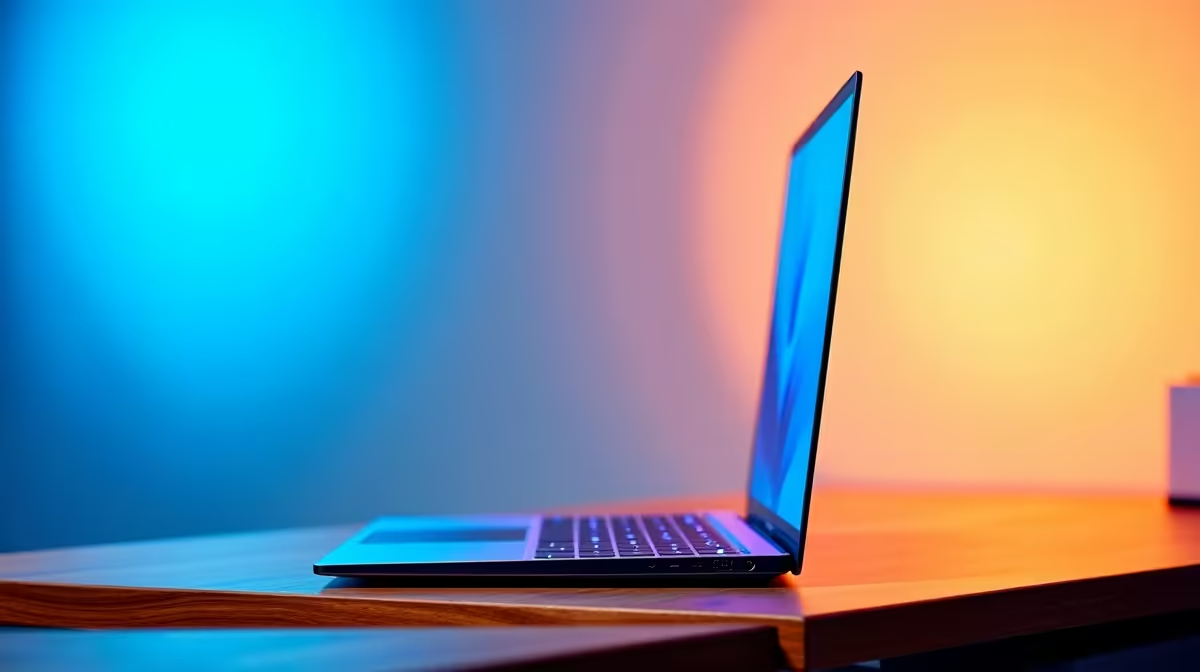
Staring at your freshly rendered video, only to find the colours look completely different on your phone? We've all been there. In South Africa, finding the perfect laptop for video editing is tough... but nailing the display is crucial. A brilliant screen isn't just a luxury; it's the difference between a professional-grade final cut and a washed-out mess. Let's make sure your next project looks exactly how you envisioned it, on every screen.
Why Your Laptop Screen is Mission-Critical
Before you even think about render times or storage speed, your display dictates the quality of your work. It's your window into the project. If that window is dirty or distorted, your final product will be too. We're talking about colour accuracy, contrast, and clarity. A poor display can lead to hours of wasted work, re-grading footage that looked perfect on your screen but appears flat or overly saturated on another. Making the right choice from the start saves you time, money, and a whole lot of frustration. It's worth browsing the current laptop specials to see what modern display tech is available in your budget.
Decoding Display Specs for Video Editors 💻
Navigating the world of laptop displays can feel like swimming in alphabet soup: IPS, OLED, HDR, DCI-P3... what does it all mean for you? Let's break down the essentials to find the best laptop display for your video editing needs.
Panel Technology: OLED vs. Mini-LED vs. IPS
This is the big one. Each technology has its pros and cons for video work.
- IPS (In-Plane Switching): For years, IPS panels have been the go-to for colour-accurate work. They offer fantastic viewing angles and consistent colour reproduction. They are reliable, affordable, and a massive step up from older TN panels.
- OLED (Organic Light-Emitting Diode): This is where things get exciting. OLED panels offer per-pixel lighting, meaning blacks are truly black, creating an almost infinite contrast ratio. This makes your footage pop and gives you incredible detail in shadows. They often have wider colour gamuts, making them a top choice for professional editors.
- Mini-LED: A newer technology that bridges the gap. It uses thousands of tiny LEDs for backlighting, offering much better contrast and brightness than traditional IPS, without the risk of burn-in sometimes associated with OLED.
Many of the machines in our top gaming laptop deals feature these advanced displays, as gamers and creators demand similar levels of quality.
Colour Gamut: Speaking the Language of Colour
A colour gamut is the specific range of colours a display can reproduce. For video, this is non-negotiable.
- sRGB: The standard for web content. 100% sRGB coverage is the absolute minimum you should accept.
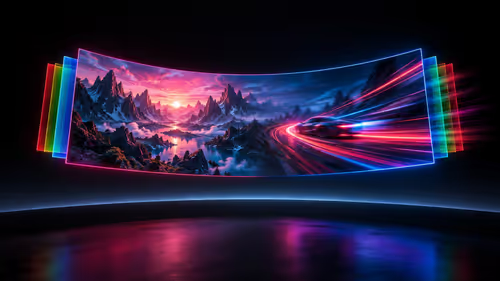
- DCI-P3: The standard for digital cinema. If you're editing video that will be viewed on modern screens (like smartphones and TVs), aiming for high DCI-P3 coverage (95%+) is essential. This ensures your reds are vibrant and your greens are lush, just as the camera captured them.
- Adobe RGB: More focused on print and photography, but wider coverage is never a bad thing for all-round creative work.
Colour Calibration 101 🎨
Your new laptop display might look great out of the box, but for professional video work, calibration is key. Invest in a hardware calibrator like a Datacolor SpyderX or Calibrite ColorChecker. These tools create a custom colour profile for your specific screen, ensuring what you see is what your audience gets. It's a small investment for perfect peace of mind.
Resolution and Brightness
Don't get fixated on 4K. While a 4K (3840x2160) screen is fantastic for editing 4K footage natively, a QHD (2560x1440) display is often the sweet spot. It offers a significant sharpness upgrade over Full HD (1920x1080) without the massive performance and battery hit of 4K. For brightness, look for a minimum of 400 nits. This ensures your screen is usable in well-lit rooms and that HDR content can be displayed properly.
Putting It All Together for the South African Creator
So, what does this mean for you, the creator in SA? It means you have more choice than ever. The key is to match the display to the performance hardware. A stunning 4K OLED screen is useless if the GPU can't handle the timeline smoothly. 🚀
This is where the platform choice comes in. You can find incredible creator-focused machines among both the powerful AMD laptops, which often pair excellent multi-core performance with efficient graphics, and the cutting-edge Intel laptops, known for their strong single-core speeds and robust Thunderbolt support for fast external drives.
Ultimately, the best laptop display for video editing in South Africa is one that balances panel technology (OLED or high-end IPS), a wide colour gamut (DCI-P3 is king), and a resolution that your hardware can comfortably drive. Don't just look at the CPU specs; give the display the attention it deserves. Your final product depends on it. ✨
Ready to See Your Edits in True Colour?
Choosing the right display technology is the final step to unlocking your creative potential. Don't let a sub-par screen hold your projects back. Explore our massive range of creator and gaming laptops and find the perfect machine to bring your vision to life.