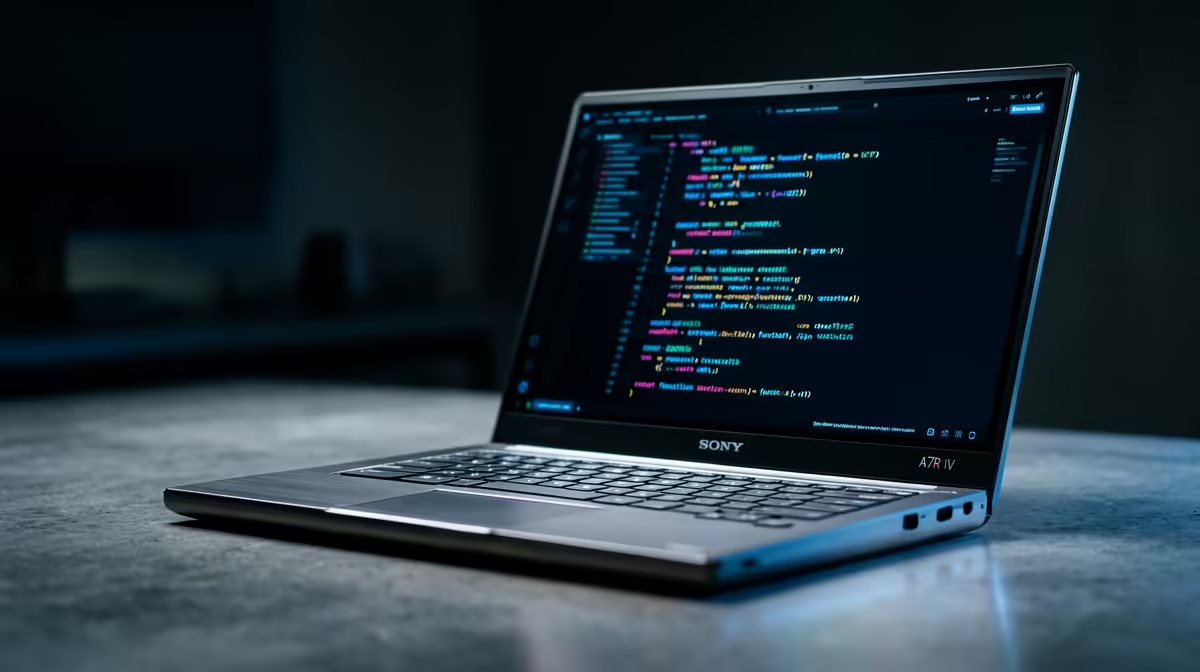
Howzit, future code wizard! Juggling varsity deadlines, a finicky compiler, and twelve browser tabs on a slow laptop is a special kind of pain. You need a machine that keeps up. Finding the best laptops for South African students studying coding isn't just about raw power; it's about finding the sweet spot between performance, battery life, and your budget. Let's find your perfect coding companion. 🚀
Core Specs That Actually Matter for Coding
Forget the marketing hype for a second. When you're choosing a laptop for programming, your focus should be on three key areas: the processor (CPU), memory (RAM), and storage (SSD). Getting this trio right means your code compiles faster, your Integrated Development Environment (IDE) runs smoother, and you spend less time staring at loading screens.
The Brains of the Operation: CPU
Your CPU does the heavy lifting. Compiling code, running local servers, and multitasking all hammer the processor. For most coding students, a modern Intel Core i5 or AMD Ryzen 5 is the perfect starting point. These chips offer a fantastic balance of performance and efficiency, handling everything from Python scripts to complex Java applications without breaking a sweat.
Memory Lane: Why 16GB of RAM is the New Standard
Ever had your laptop grind to a halt with a few Chrome tabs, VS Code, and Spotify open? That's a RAM bottleneck. While 8GB might seem okay, 16GB is the true sweet spot for a smooth coding experience. It gives you the headroom to run virtual machines, Docker containers, or memory-hungry apps like Android Studio without constant slowdowns. It's a non-negotiable for a modern laptop for a coding student.
Don't Skimp on Storage Speed ⚡
Always choose a laptop with a Solid-State Drive (SSD) over an old-school Hard Disk Drive (HDD). An SSD means your operating system boots in seconds, applications launch instantly, and large project files open without a frustrating wait. A 512GB NVMe SSD is the ideal capacity and speed for most students.
Choosing Your Engine: Intel vs. AMD
The "blue vs. red team" debate is alive and well in the world of student laptops. Both Intel and AMD produce incredible processors, but they have slightly different strengths. Understanding these can help you find the best laptop for your coding studies in South Africa.
For tasks that rely on strong single-core performance (like many compilers and general system responsiveness), Intel has historically held a slight edge. You can find some great deals on Intel laptops that are perfect for general-purpose programming and everyday varsity work.
On the other hand, AMD often packs more cores into their CPUs at a competitive price point. This is a massive advantage for tasks that can be split up, like rendering, running multiple virtual machines, or compiling large, complex codebases. If your coursework involves data science or heavy multitasking, exploring these powerful AMD laptops is a very smart move.
Beyond the Code: Keyboard, Screen & Battery Life
You'll be spending thousands of hours staring at this screen and typing on this keyboard. Don't overlook ergonomics and quality of life features!
- Keyboard: A comfortable, backlit keyboard is a lifesaver during those late-night study sessions. Look for decent key travel and a logical layout.
- Screen: A Full HD (1920x1080) IPS display is essential. It provides sharp text and great viewing angles, reducing eye strain. A brighter screen with good colour accuracy makes a huge difference.
- Battery Life: With an unexpected outage being a reality, a laptop that can last through a few lectures without being plugged in is a massive bonus. Look for models rated for 6+ hours of real-world use.
Often, the features that make a great gaming laptop—excellent keyboards, high-refresh-rate screens, and robust cooling—also make for a fantastic developer machine. Checking out the best gaming laptop deals can uncover some high-performance bargains perfect for coding. ✨
Ready to Compile Your Future?
The right tool makes all the difference. Find a laptop that won't bottleneck your brilliance and browse our massive range of student-friendly deals. Shop our latest laptop specials and get the performance you deserve.