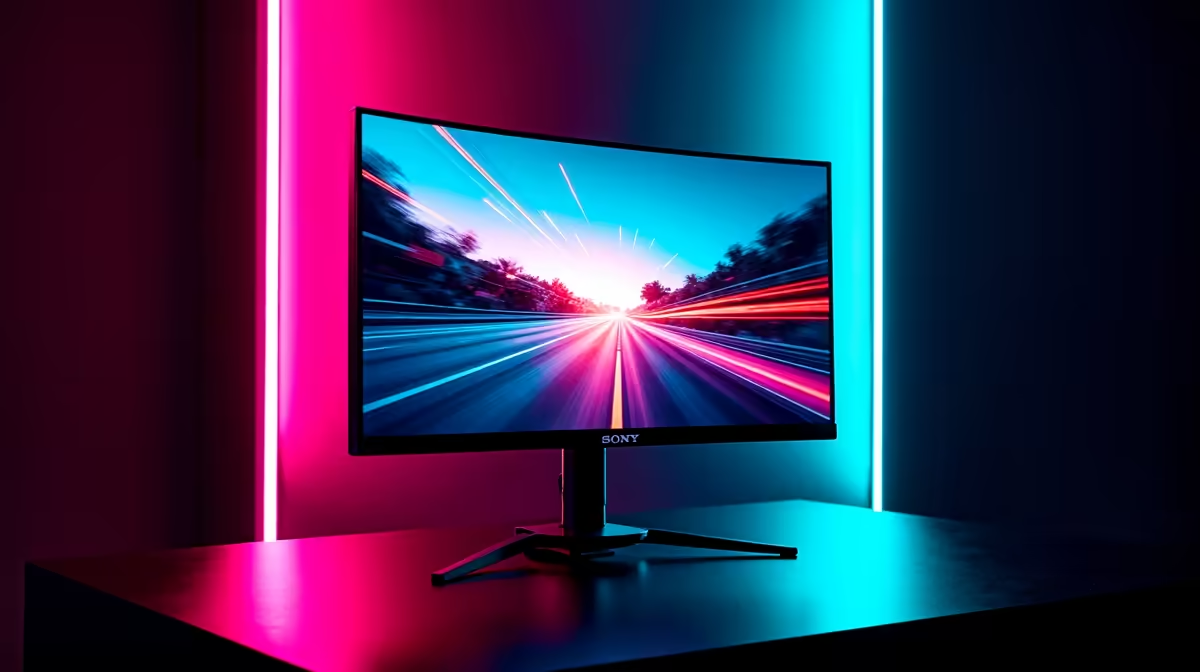
So, you’ve just dropped some serious cash on a new graphics card, ready to crank up the settings on Helldivers 2. The game loads, you drop into a hectic firefight… and your screen tears into a jagged mess. It’s a classic problem for PC gamers in Mzansi. The big question is how to fix it. This brings us to the ultimate monitor showdown: FreeSync vs G-Sync in South Africa. Which one gives you the smoothest gameplay without breaking the bank?
What is Adaptive Sync and Why Does it Matter?
Before we dive into the brand battle, let's quickly cover the basics. Screen tearing happens when your graphics card (GPU) sends out frames at a different rate than your monitor can display them. The result is a horrible visual split that ruins immersion.
Adaptive Sync technology solves this by allowing your monitor to dynamically change its refresh rate to match the frames-per-second (FPS) your GPU is producing. This creates a perfectly synchronised, buttery-smooth image. Both FreeSync and G-Sync are types of Adaptive Sync, but they go about it in very different ways.
G-Sync: The NVIDIA Gold Standard 🏆
G-Sync is NVIDIA's proprietary solution. To get the official G-Sync stamp, a monitor must have a special hardware module installed. This module takes control of the screen's refresh rate, ensuring flawless communication with your NVIDIA GeForce GPU.
Key Features of G-Sync:
- Dedicated Hardware: The internal scalar chip ensures top-tier performance and reliability.
- Strict Certification: NVIDIA has a rigorous testing process. If a monitor has the G-Sync label, you know it performs exceptionally well.
- Higher Cost: That special hardware and licensing fee adds a premium to the price tag, often making these screens more expensive.
Because of this strict quality control, G-Sync has long been the choice for enthusiasts who want the absolute best performance from the wide world of PC monitors available today.
FreeSync: The Open and Affordable Challenger 💰
On the other side, we have AMD's FreeSync. It's built on an open standard from VESA (the people who define standards like DisplayPort). This means monitor manufacturers can implement it without paying licensing fees to AMD.
Key Features of FreeSync:
- Open Standard: No special hardware is required, which dramatically lowers the cost for both manufacturers and you.
- Wide Availability: You'll find FreeSync on a massive range of monitors, from budget-friendly 1080p screens to high-end displays.
- Variable Performance: Because the standard is more open, the quality of the FreeSync experience can vary between monitors. That's why AMD introduced tiers: FreeSync, FreeSync Premium, and FreeSync Premium Pro (which adds HDR support).
The affordability of FreeSync makes it a dominant feature, especially when you're looking for smooth gameplay on demanding 5K and 4K monitors without having to spend a fortune.
The Big Showdown: FreeSync vs G-Sync in South Africa
So, which technology is the more cost-effective choice for a South African gamer? For the vast majority of people, the answer is FreeSync.
The price difference is significant. A 27-inch, 1440p, 165Hz FreeSync Premium monitor can often be found for thousands of Rands less than a G-Sync monitor with the exact same specs. That's money you could put towards a better GPU, more RAM, or a bigger SSD.
Furthermore, the "G-Sync Compatible" program has changed everything. NVIDIA now allows its GPUs to use the FreeSync protocol on approved monitors. This means you can buy a more affordable FreeSync monitor and still get a tear-free experience with your GeForce card. It's the best of both worlds! While a dedicated G-Sync monitor might offer a slightly more consistent experience at very low frame rates, the value proposition of a good FreeSync Premium display is almost impossible to ignore in the current market of all gaming monitors. Getting lost in the world of an immersive curved monitor with silky-smooth frames is now more accessible than ever.
Pro Tip: Enabling G-Sync on a FreeSync Monitor ⚡
If you have an NVIDIA GPU (10-series or newer) and a FreeSync monitor, you can likely enable G-Sync! First, ensure you're using a DisplayPort cable. Then, open the NVIDIA Control Panel, go to "Set up G-SYNC," check the box for "Enable G-SYNC, G-SYNC Compatible," and apply. It might not be officially certified, but it works perfectly on many displays!
So, Which One Should You Buy?
Let's break it down based on your needs.
- For the Budget-Conscious Gamer: Go for a FreeSync or FreeSync Premium monitor. The value is unbeatable, and it will give you a fantastic, smooth experience. You can find some amazing options among the best PC monitor deals available right now.
- For the NVIDIA Power User: If you have a top-tier NVIDIA card (like an RTX 4080 or 4090) and want the absolute most reliable, plug-and-play experience with zero compromises, a true G-Sync or G-Sync Ultimate monitor is a worthy investment.
- For Everyone Else: A well-reviewed "G-Sync Compatible" FreeSync Premium monitor is the sweet spot. It delivers 95% of the G-Sync experience for a fraction of the cost, making it the smartest choice in the FreeSync vs G-Sync South Africa debate.
And this technology isn't just for your main rig; even some modern portable monitors now include basic adaptive sync for smooth gaming on the go. Once you've chosen your screen, complete your perfect setup with the right monitor accessories to get the most out of it.
Ready to Banish Screen Tearing for Good?
The FreeSync vs G-Sync South Africa debate often comes down to your budget and GPU. For maximum value and choice, FreeSync is hard to beat, while G-Sync offers a premium, guaranteed experience. Explore our incredible monitor deals and find the perfect screen to conquer your game.