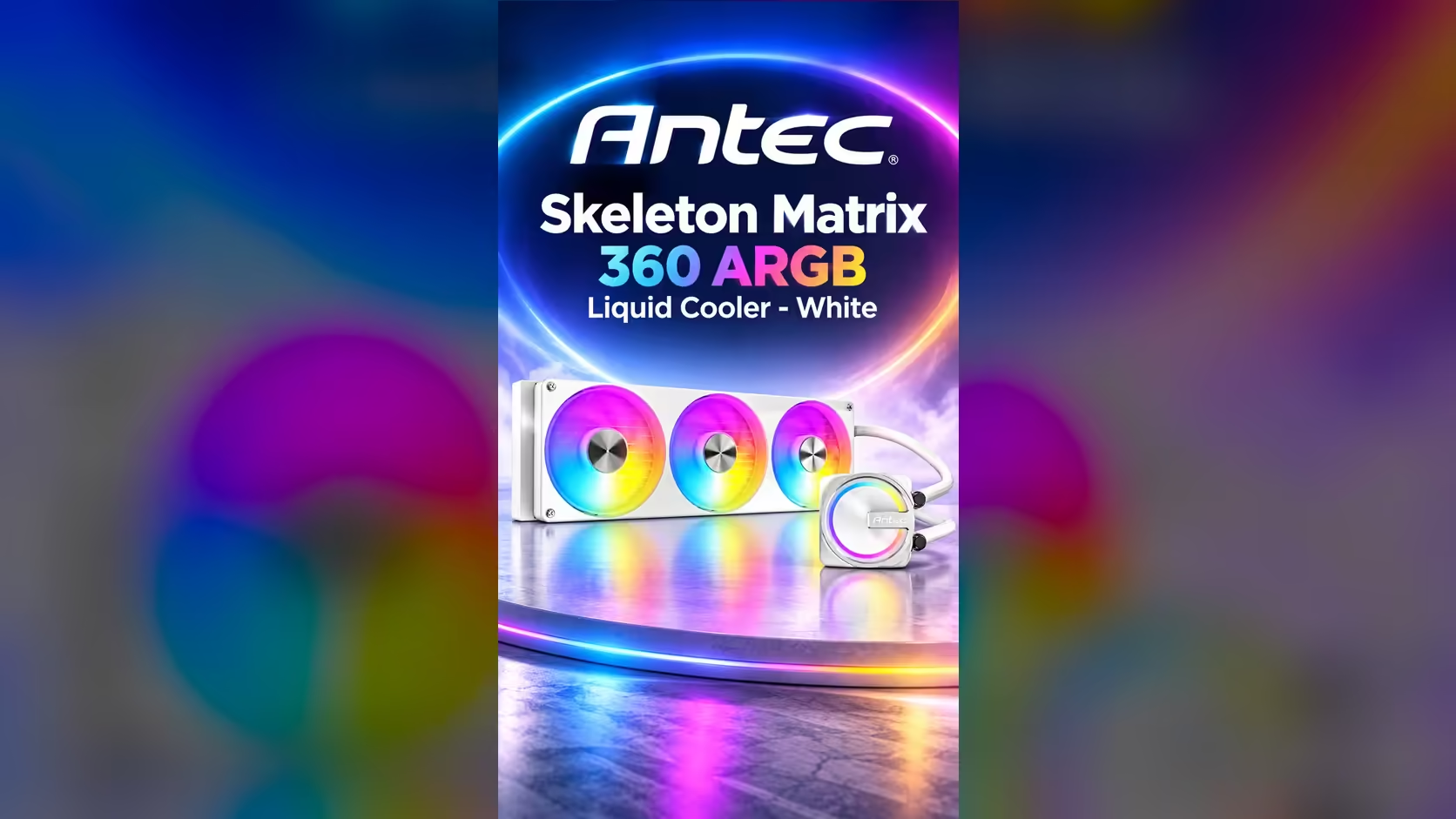
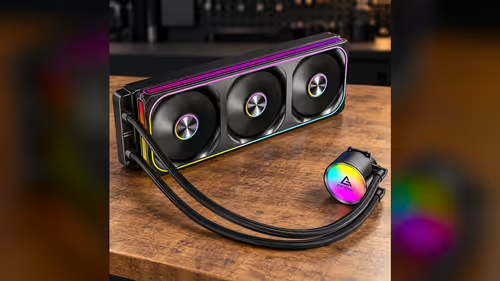
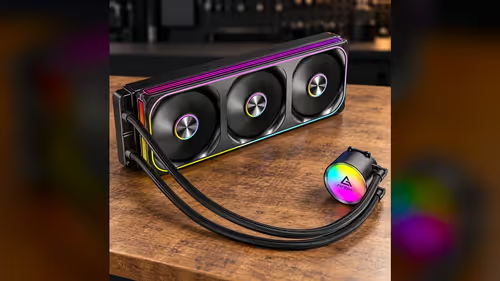
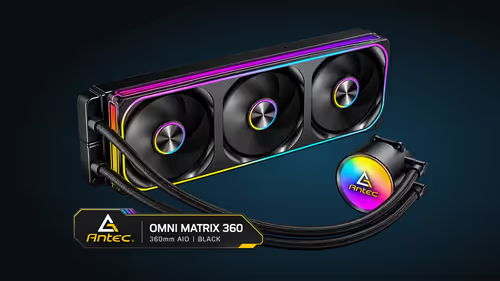
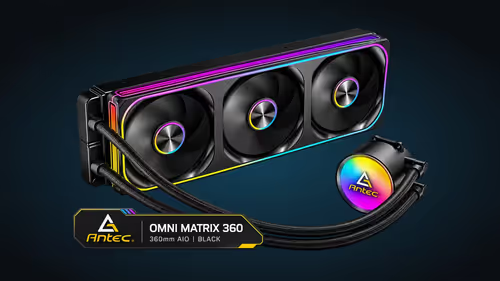
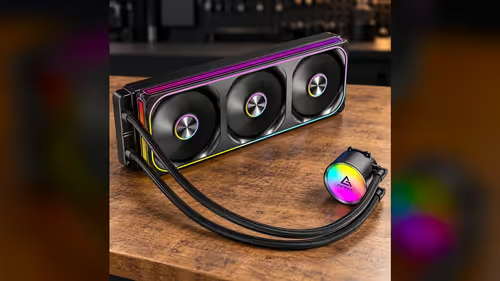
Tube material is the least-discussed part of an AIO cooler, yet it decides how much coolant stays inside the loop over the years a cooler is in service. The Antec Skeleton Matrix 360 White uses IIR-EPDM tubing, which is there to limit coolant loss. Other AIO tube materials make different trade-offs on cost, wall thickness and how easily a tube routes through a case. This guide compares those factors so you can judge a tube by what it does to the loop, not by how it feels in your hand.
Quick Answer
IIR-EPDM is a rubber-based tubing material chosen to limit coolant loss, and it is judged on how little fluid passes through its walls over time. Other AIO tube materials trade cost, wall thickness and routing ease against that loss. This cooler's tubing is IIR-EPDM, and the whole unit costs R1,199 including VAT.
🧪 What the tube has to hold back
Coolant does not leak out of a loop in one dramatic burst. It passes slowly through the tube wall, and the rate depends on the material. If a loop is expected to run for five years in a case, even a slow rate has to stay small across all five of them.
IIR is a butyl-type rubber, and butyl rubbers are known for low permeability compared with many other elastomers. EPDM adds resistance to heat and ozone, which helps a tube hold its shape in a warm case. A blend of the two is a common way to balance a low loss rate against the need for a rubber that survives years of heat. The Skeleton Matrix 360 White's tubing is IIR-EPDM for that reason, and its job in the loop is limiting coolant loss.
Permeation is the metric that matters, and it is hard to judge by eye. A tube that feels solid is not automatically a tube that holds coolant, so compare materials on their loss rate, not on their stiffness at the shop counter.
📐 Wall thickness and outside diameter
AIO tubing is commonly around 14mm in outside diameter, and the wall thickness is what changes from one design to the next. A thicker wall generally slows permeation, because the fluid has further to travel through the material. The same thicker wall stiffens the tube, which makes it harder to bend around fans and motherboard standoffs.
That is the central trade-off. Thin walls route easily and feel friendlier in a tight build, but they give the coolant a shorter path through the material. Thick walls hold coolant better and fight you during routing. Neither choice is wrong. The right one depends on how much room the case gives the tube and how long you expect the loop to run without a top-up.
Measure the route before you choose. Lay a length of tube along the path from the pump to the radiator and note every bend. Count the bends, because each one adds resistance to routing and a little strain on the wall.
🔀 Routing, bend radius and the kink risk
A bend radius under about 42mm, roughly three times the 14mm tube's diameter, risks a kink, and a kinked tube restricts flow in the loop. That rule of thumb applies to rubber tubing in general, so plan bends with room to spare rather than forcing a tube around a corner it does not want to take.
Rubber tubing bends more easily than rigid tube, but a bend that is too sharp still crimps the inner wall. Keep tubing clear of fan blades and sharp case edges, and check the route with the side panel open before you tighten the cooler down.
Routing also affects how the radiator sits in the case. A tube that pulls the radiator out of its mount, even slightly, can put strain on the fittings over time. Work with the tube's natural curve rather than against it.
💸 What the price buys when the material is right
Cheaper tube materials cut the cost of a cooler, and buyers pay for that saving later in the loop's long-term hold. The Skeleton Matrix 360 White sits at R1,199 including VAT with IIR-EPDM tubing already fitted, so the material choice is made for you before the cooler reaches the case.
When you compare coolers, ask what the tube is made from, how its wall is built and how the loop routes in your case. Those three answers tell you more about long-term performance than a glossy spec line about looks.
Tubing does not move heat by itself. Its role is to keep the coolant where it belongs, so the pump can keep carrying heat from the processor to the radiator. A loop that loses coolant over time loses cooling performance as well, which is why the material matters even though you never see it working.
The 360mm AIO coolers range lines up the options, and the CPU coolers category holds the rest of the range.
🛠️ Checking the tubing after the build
Give the loop 24 hours after filling and check every fitting for weeping before you close the case. Look again after a month, once the tubing has settled into its final bends. A joint that is dry on day one and damp on day thirty points to the fitting, not the tube, so tighten or reseat that joint first.
The tubing also settles over the first few weeks, so do not judge the route on the first afternoon. Recheck each bend with the side panel open, because a tube that has relaxed can touch a fan frame that looked clear on day one.
Frequently Asked Questions
Why is IIR-EPDM used in AIO tubing?
The blend is picked for one reason: to keep coolant from seeping through the wall. The Skeleton Matrix 360 White's tubing is built around that job.
Is a thicker tube always better?
Not always. A thicker wall slows permeation, but it stiffens the tube and makes routing harder, so the right choice depends on the room your case gives the tube.
Does tubing material change the cooling itself?
Not directly. Tubing carries the coolant, but a loop that loses coolant over time loses cooling performance as well.
How do I compare two AIO tube materials?
Compare them on coolant loss, wall thickness and routing ease, and measure the path in your case before you choose.
Ready to compare AIO coolers on tubing and radiator size?
Browse Evetech's liquid CPU cooler range, then measure the route and mount in your case before you order.