


PCIe 5.0 vs PCIe 4.0 for Strategy and Sim Games in SA
PCIe 5.0 and PCIe 4.0 differ most in lane support, compatibility, and upgrade value for strategy and sim games. SA buyers should match the choice to their actual hardware and games.
Read moreUltra-compact mini PCs often solder LPDDR5 directly onto the board for space efficiency, making the RAM permanently fixed and non-upgradeable, while SO-DIMM models can be opened and expanded with standard DDR5 modules.
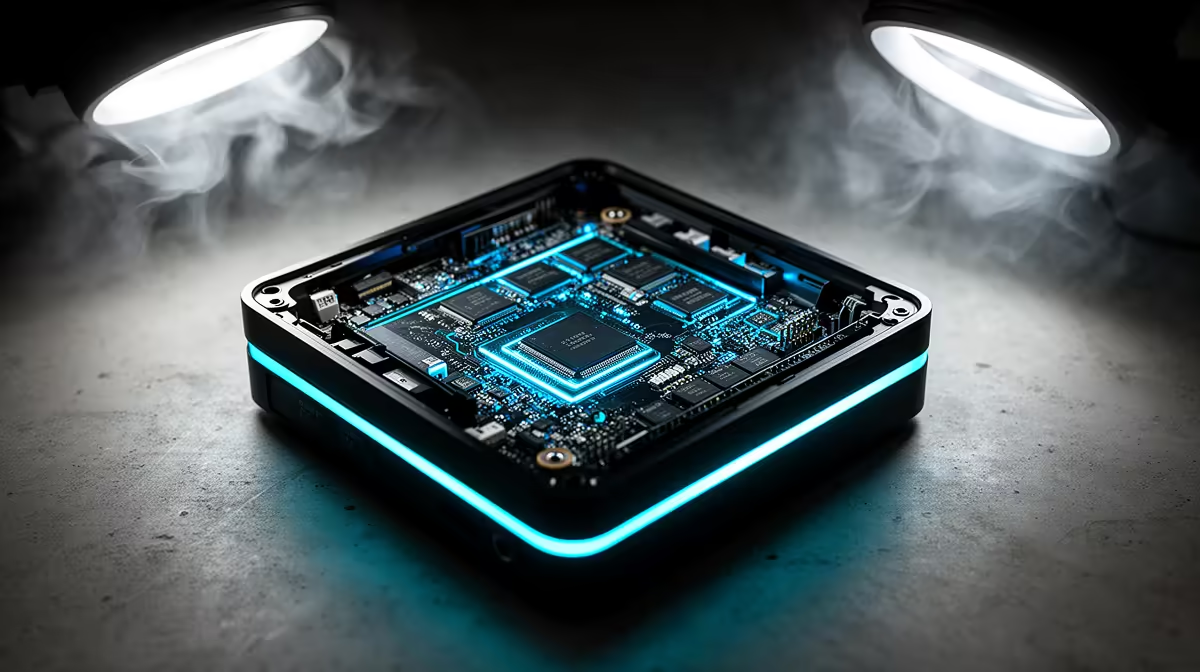
Buying a mini PC and assuming you can add RAM later is one of the easiest ways to get caught out. Soldered versus SO-DIMM memory is the line between a machine you can grow and one that is fixed forever the day you buy it. Compact boxes increasingly solder LPDDR5 straight onto the board for speed and space, while more serviceable models use removable SO-DIMM DDR5 sticks. Knowing which is which before you pay is the whole game.
If a mini PC's RAM is soldered LPDDR5, it is permanent: whatever capacity ships from the factory is what you have for the life of the machine, with no upgrade path. If it uses SO-DIMM DDR5, you can open it and swap or add modules later. Check the spec sheet for "SO-DIMM," "soldered," or "non-upgradeable," and if it is unclear, ask the seller before buying.
Soldered LPDDR5 is fixed directly to the motherboard, usually right next to the processor. That close placement is the point: the short distance allows very fast transfers and helps integrated graphics, and it lets the machine be smaller and thinner. The trade-off is absolute. Buy 16GB of soldered memory and you have 16GB for the life of the machine. If your needs outgrow it, you replace the whole unit.
SO-DIMM DDR5 uses the familiar removable sticks that clip into slots inside the chassis. Pop the bottom cover and the sockets are right there. You can add capacity, replace a module with a larger one, or upgrade to faster modules within what the platform supports. It is slightly less compact and a touch less power-efficient, but it keeps the door open.
The honest answer is that manufacturers do not always make this obvious, so you have to look in the right places. Read the full specification, not just the headline. The words you want to find are "SO-DIMM," "DDR5 slots," or "upgradeable" for the good case, and "soldered," "LPDDR5 on-board," or "non-upgradeable" for the fixed case.
If the listing is vague, that vagueness is often a tell. Ask the seller directly whether the memory is soldered or socketed before you commit. For local buying this is easy to confirm in advance, and it is far better than discovering the truth from a teardown video after the return window has closed. The full lineup, with specifications you can compare side by side, is in the mini PCs range at Evetech.
Soldered memory used to be confined to the smallest, cheapest boxes. It has now crept into the mid and upper tiers, where buyers reasonably assume they are paying for expandability. At the same time DDR5 has become the mainstream standard for socketed memory, so a serviceable mini PC today will almost certainly use SO-DIMM DDR5 rather than older DDR4. The result is a sharper split: tiny premium boxes that are sealed for life, and slightly larger ones built to be opened.
Many 2026 premium mini PCs solder LPDDR5X rather than standard LPDDR5. The X variant runs at higher transfer rates, typically 6,400 MT/s to 8,533 MT/s, versus the 5,500 MT/s ceiling of most SO-DIMM DDR5 kits. That speed advantage benefits integrated graphics in particular, because the iGPU shares system memory bandwidth and a faster pool lifts frame rates in light gaming and media decode. If a machine ships with LPDDR5X at 128GB, the speed trade-off against SO-DIMM is small; the expandability trade-off remains absolute.
Standard SO-DIMM DDR5 runs at lower peak speeds but generally offers lower CAS latency, which helps with rapid random-access workloads like databases and virtualization. For an always-on home server that handles many small requests, that latency advantage can matter more than raw bandwidth. For a light desktop or media player, either memory type is more than sufficient and you would not feel the difference day to day.
There is no universally right answer, only the right answer for your use. If you want the smallest, quietest machine and you are confident the capacity on offer covers you for years, soldered LPDDR5 is fine and even slightly faster. If you would rather start lower and add memory as your needs grow, or simply keep the option open, insist on SO-DIMM DDR5. The mistake is not choosing soldered; it is choosing soldered by accident.
If your machine has soldered RAM and you are running short, the memory itself cannot be changed, but you have options around it. Closing background apps, increasing the page file, and offloading heavy work to external storage or a more capable second machine can all stretch a fixed configuration further. When that stops being enough, the upgrade is a new unit, so when you replace it, this is the moment to choose a socketed model. Browsing the PC best sellers at Evetech lets you see which configurations offer SO-DIMM slots and real expandability before you commit.
Check the full specification for "SO-DIMM" or "DDR5 slots" (upgradeable) versus "soldered" or "LPDDR5 on-board" (fixed). If the listing is unclear, ask the seller directly before you buy.
No. Soldered memory is permanently fixed to the board with no slots, so the capacity you purchase is the capacity for the life of the machine. Upgrading means replacing the whole unit.
Not in performance: soldered LPDDR5 sits closer to the processor and can be slightly faster and more efficient. It is worse only for serviceability, because you lose the ability to add or change memory later.
You can use modules of the matching DDR5 generation up to the capacity and speed the platform supports. Check the manufacturer's maximum before buying memory so the modules are recognised correctly.
Soldering saves space, allows thinner designs, and slightly improves speed and efficiency. The downside for buyers is that it has spread into mid and upper price tiers where expandability was once expected.
Want a mini PC you can actually upgrade? Compare soldered and SO-DIMM models in the mini PCs range at Evetech and confirm the memory type before you commit.
Check the full specification for "SO-DIMM" or "DDR5 slots" (upgradeable) versus "soldered" or "LPDDR5 on-board" (fixed). If the listing is unclear, ask the seller directly before you buy.
No. Soldered memory is permanently fixed to the board with no slots, so the capacity you purchase is the capacity for the life of the machine. Upgrading means replacing the whole unit.
Not in performance: soldered LPDDR5 sits closer to the processor and can be slightly faster and more efficient. It is worse only for serviceability, because you lose the ability to add or change memory later.
You can use modules of the matching DDR5 generation up to the capacity and speed the platform supports. Check the manufacturer's maximum before buying memory so the modules are recognised correctly.
Soldering saves space, allows thinner designs, and slightly improves speed and efficiency. The downside for buyers is that it has spread into mid and upper price tiers where expandability was once expected.
PCIe 5.0 and PCIe 4.0 differ most in lane support, compatibility, and upgrade value for strategy and sim games. SA buyers should match the choice to their actual hardware and games.
Read more
AM5 vs AM4 for video editing in 4K Difference explained is mostly about compatibility, budget, upgrade path, and setup fit. SA buyers should check device support and real needs before expecting a clear win from either option.
Read more
OLED vs QD-OLED for strategy and sim games buyers - what changes is mostly about compatibility, budget, upgrade path, and setup fit. SA buyers should check device support and real needs before expecting a clear win from either option.
Read more
DisplayPort 2.1 and 1.4 differences matter when SA PC builders match GPUs, monitors, and refresh targets. Use this difference between displayport 2 1 and displayport 1 4 explained pc builders guide to avoid mismatched parts.
Read more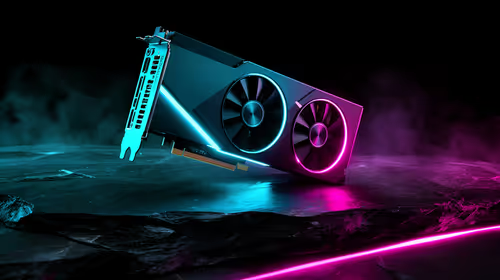
Ray tracing vs Path tracing depends on Strategy and sim games needs, platform limits, and budget fit. Compare compatibility, latency, upgrade path, and real setup constraints before choosing for an SA build.
Read more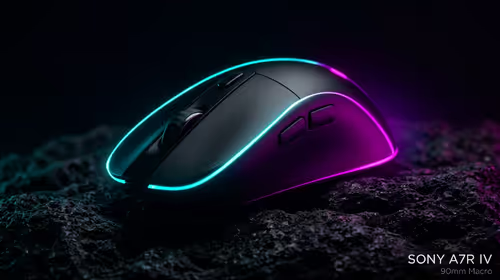
wireless mouse guide for Gqeberha gamers should be shortlisted around the job it must do. South African buyers should compare sensor, shape, weight, and wireless latency, warranty path, and upgrade room before treating any pick as best.
Read more
From 1 October 2026, WhatsApp Business Platform service replies in South Africa are expected to cost about $0.0076, or 12 cents, per delivered message.
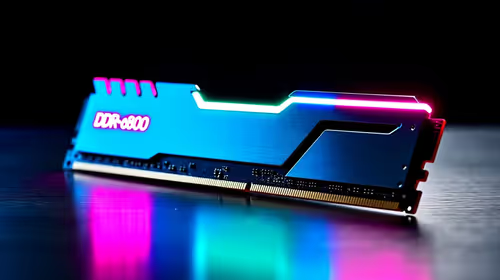
DDR5-8000 RAM Kits pros and cons depend on the build, budget, and workload. Weigh gaming needs, platform fit, power, cooling, warranty support, and South African pricing context before shortlisting it.

Wi-Fi 6E vs Wi-Fi 6 depends on AAA single-player gaming needs, platform limits, and budget fit. Compare compatibility, latency, upgrade path, and real setup constraints before choosing for an SA build.
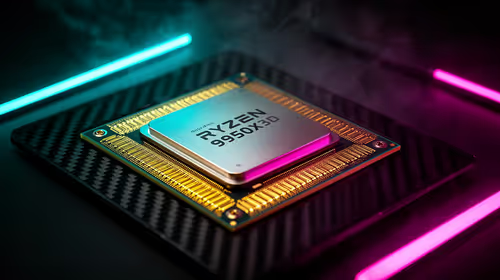
Ryzen 9 9950X3D dead pixel checks should isolate the panel first. Run colour fills, inspect the monitor menu, test another cable or input, and capture proof before linking it to the SA CPU upgrade.

YouTube will count public views from the first frame across video formats from 24 August, while earnings and eligibility remain tied to engaged viewing.
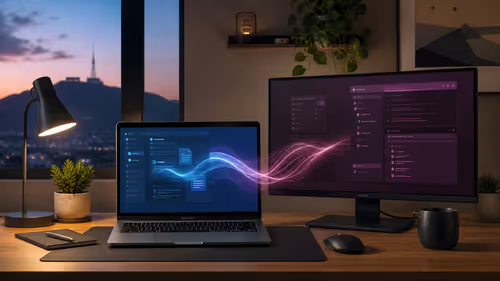
Canonical expects Ubuntu on WSL users to outnumber native Ubuntu desktop users before the end of 2026. The software is open source and runs inside supported Windows PCs.
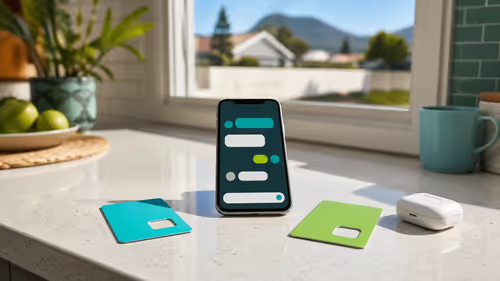
Telkom's daily bundles pair WhatsApp access with 10 all-network voice minutes. The R15 option includes 300MB, while the R17 option uses a fair-use threshold.

A 10,000-hour test found similar image retention across older and newer OLED TVs, while newer panels were brighter and more efficient. Local OLED monitors started at R9,999.
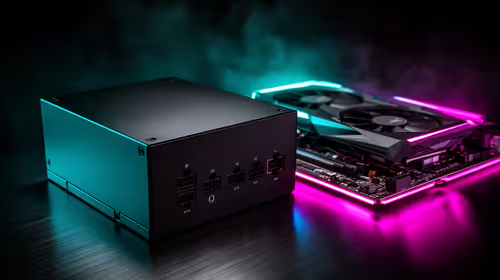
650W for RTX 5090 needs a full-build check, not a simple yes. Review GPU guidance, CPU draw, transient load, connectors, PSU quality, and upgrade plans before deciding.
PCIe 5.0 and PCIe 4.0 differ most in lane support, compatibility, and upgrade value for strategy and sim games. SA buyers should match the choice to their actual hardware and games.

How to fix FPS drops Windows 11 RX 9070 XT starts with GPU drivers, overlays, power plans, and frame pacing checks. For SA gaming PCs, verify chipset updates, HAGS, refresh rate, thermals, and per-game graphics settings.
AM5 vs AM4 for video editing in 4K Difference explained is mostly about compatibility, budget, upgrade path, and setup fit. SA buyers should check device support and real needs before expecting a clear win from either option.