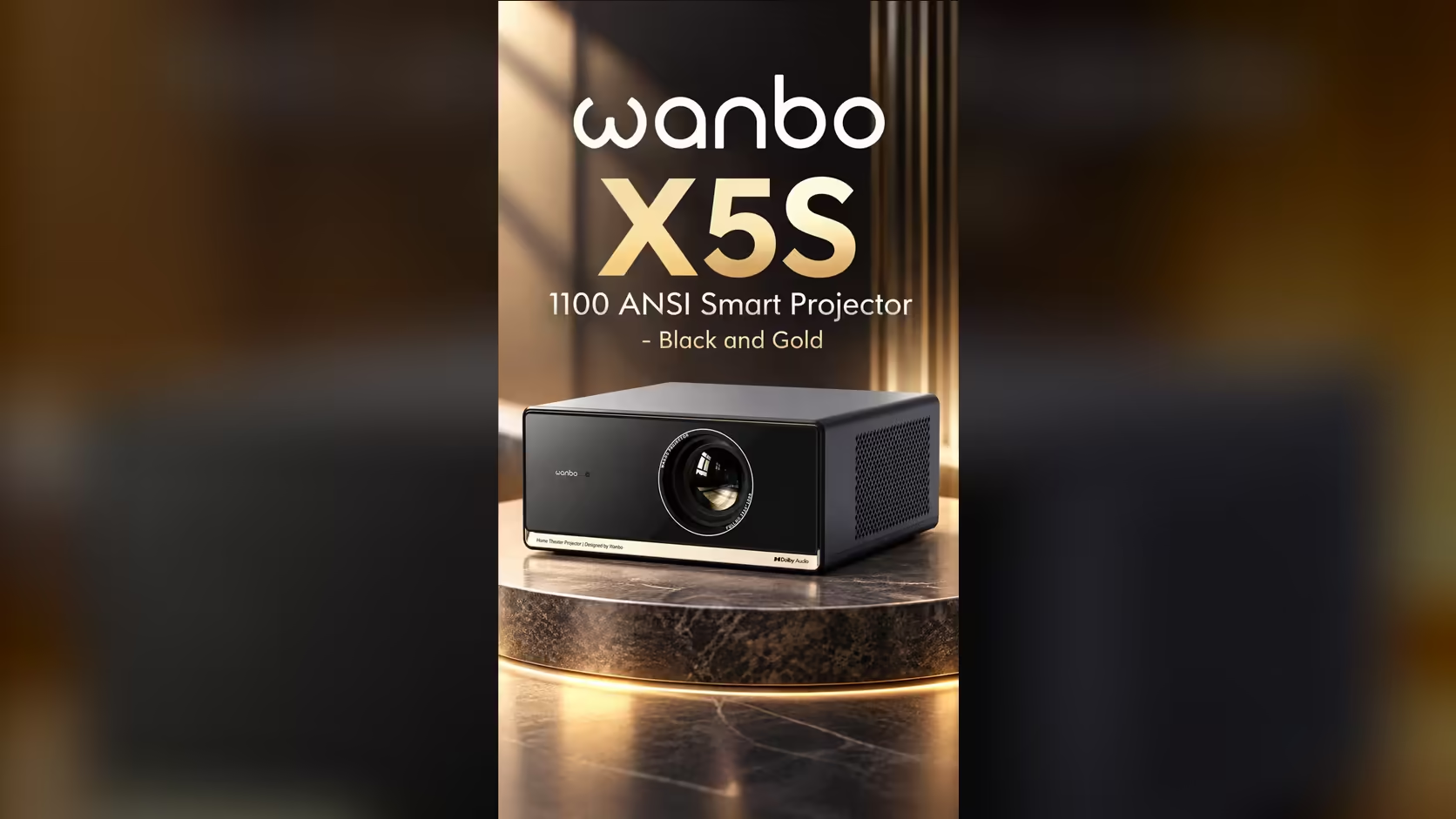
Projector spec sheets quote ANSI lumens, and the number is easy to misread. A projector rated at 1100 ANSI lumens is not making a single 1100-lumen spot of light. The ANSI method measures brightness at nine points across the picture and averages them, so the figure tells you how bright the whole image is, not how bright its best corner gets. That makes it a fair way to compare, but only if you also understand what it does to your picture on a real wall.
Quick Answer
The Wanbo X5S is rated at 1100 ANSI lumens, an average across nine measured points on the image. That is enough for a clear, bright picture in a dim lounge from roughly 60 to 100 inches. Daylight through an open window will wash the image out sooner, so close the curtains for the best result. The X5S sells for R6,899, VAT included.
🔬 What the nine-point average measures
The ANSI method takes readings at nine evenly spaced points on the projected picture and averages them. The result is a middle value: the centre may read a little higher and the far corners a little lower. Some spec sheets quote a peak or best-case figure measured under different conditions, which can look far larger on paper. When you compare two projectors, check that both are quoted in ANSI lumens, because the same unit can look brighter or dimmer depending on the method.
For the X5S, the 1100 ANSI lumen figure is the honest starting point. It sits on the product spec beside the 3000:1 contrast ratio and HDR10 support, and the three numbers work together. Brightness lifts the picture off the wall, contrast gives the blacks their depth, and HDR10 only shows its extra highlights when the room lets the projector deliver them.
📐 Why the same lumens look dimmer on a bigger picture
Light from a projector spreads over the whole image, so a larger picture gets less light per square metre. A 140-inch image covers about 5.4 square metres of wall, while a 100-inch image covers about 2.7 square metres. The 140-inch picture is roughly twice the area, so the same 1100 lumens are spread across twice the wall. That is why a projector that looks punchy at 80 inches can seem soft at 140 inches in the same room.
If you plan to run the largest size most of the time, reduce the room light further. Keep the curtains closed and switch off any lamp that shines onto the wall, because every stray light source takes away from the contrast the X5S can deliver.
💡 Set the room, not just the projector
Lumens only matter once you know what your room is doing to the picture. In a dim lounge with the curtains drawn, 1100 lumens gives an image bright enough for films and sport at night. In a lounge with the blinds open on a bright Highveld afternoon, the same image competes with the daylight on the wall, and the blacks in dark scenes lift to grey. The practical test is simple: watch a dark film scene at the time of day you plan to use the projector, and see whether the shadows still hold their detail.
HDR10 content benefits most from a dark room. Its highlights are brighter and its shadows deeper, so the difference shows clearly only when the room is dark enough for the shadows to read as black. If you mostly watch in daylight, expect the X5S to look best in the evening and treat the lumen figure as the limit it has to work within.
🧪 Test the brightness in your own room
A spec figure only becomes useful once you have checked it against the room it has to fill. Switch the X5S on at the size you plan to use most, play a dark scene from a film you know well, and look at the shadows. If you can read faces and the outlines of furniture in the corners, the brightness is working for you. If the shadows have become a flat grey wash, the room has too much light, and the fix is the curtains rather than the projector.
Run the test twice at the same time of day, once with the curtains open and once closed. The gap between the two results is often larger than any difference between two projectors on paper. In a Gauteng home where the afternoon sun comes in low through a lounge window, the closed-curtain test is the one that tells you whether 1100 lumens will serve your evenings.
🧭 Pick the brightness you need
For a home that watches mostly after dark, the X5S is a clear fit for a lounge or bedroom picture between 60 and 100 inches. For a family that watches during the day, blackout curtains are the first purchase, because a bright room will undo any projector. The 140-inch maximum is best reserved for a dim room, since the extra size spreads the same light thinner.
Blackout curtains and a plain wall often do more for the picture than a brighter projector you then have to fight daylight with. Our projector range groups the projectors we sell, and the projector category is the quickest way to compare brightness ratings side by side.
📊 Compare two lumen figures
If one projector quotes 1100 ANSI lumens and another quotes a peak figure several hundred lumens higher, put them on the same footing before you compare. Ask for the ANSI number on both sheets. The X5S's 1100 ANSI lumens is the figure to hold against any other unit in its class, and the room you plan to use decides whether that figure is enough.
Frequently Asked Questions
Is 1100 ANSI lumens bright enough for a lounge?
Yes, for a lounge that can be kept dim in the evening. It gives a clear picture from about 60 to 100 inches, and it works best with the curtains closed.
Why does my picture look dull in the afternoon?
Daylight adds light to the wall, which lifts the black levels and reduces contrast. Close the curtains or move the picture to a wall away from the window.
Does HDR10 need more brightness?
HDR10 needs a dim room to show its highlights and shadows properly. The X5S supports HDR10, but the effect is most visible when the room is dark.
Find the brightness that suits your room.
Compare the projectors on our range, then match the lumen figure to the room you plan to use.