Remember when OLED monitors felt like a distant dream? A piece of tech so premium that the price tag in Rands had more zeros than a server's source code. For years, we admired those perfect blacks and vibrant colours from afar. But lately, something has shifted. You're seeing more deals, more options, and prices that don't require selling a kidney. So, what’s the story? Let's break down the tech economics and explain why OLED prices are dropping right here in South Africa.
The Old Guard: Why Were OLEDs So Expensive?
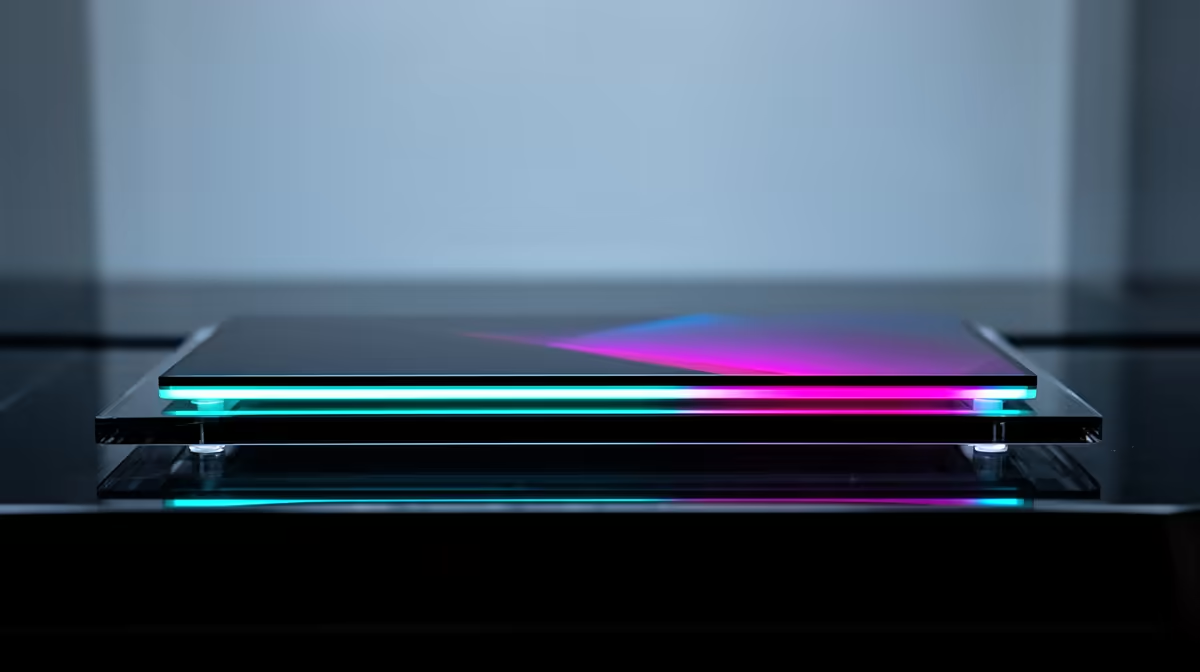
To understand today's price drops, we first need to look back. Initially, manufacturing OLED (Organic Light-Emitting Diode) panels was incredibly difficult and expensive. Unlike traditional LCDs, where a single backlight shines through a panel of pixels, each pixel in an OLED screen creates its own light.
This self-emissive tech is the secret to OLED's famous infinite contrast ratio—if a pixel is black, it’s simply turned off. However, producing millions of these tiny, perfect organic diodes on a large screen without defects was a massive challenge. Factories had low "yield rates," meaning a large percentage of panels made had to be thrown away. Those high production costs were passed directly on to early adopters.
So, Why Are OLED Prices Dropping Now?
The good news is that the landscape has changed dramatically. Several key factors are working together to make this incredible technology more accessible, finally putting it on the radar for more PC monitors shoppers.
Manufacturing Has Matured 🔧
The biggest reason for the OLED price drop is manufacturing maturity. After years of refinement, companies like LG Display and Samsung Display have perfected their processes.
- Higher Yields: They now produce far fewer defective panels, drastically cutting waste and cost per unit.
- Economies of Scale: As demand grew for OLED TVs, production lines expanded. This massive scale means it's now cheaper to produce monitor-sized panels as well.
- New Tech: Innovations like inkjet printing for OLED materials are being developed, promising even cheaper production in the future.
This efficiency means you can now find some of the best PC monitor deals on tech that was once reserved for the ultra-enthusiast.
Competition is Heating Up 🔥
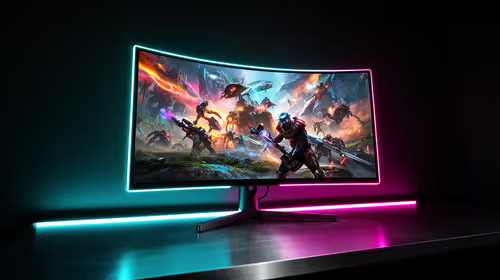
For a long time, one company dominated the OLED panel market. Now, competition is fierce. With multiple manufacturers battling for your business, they are forced to innovate and, more importantly, lower their prices. This rivalry is fantastic for consumers, leading to a wider variety of panels, features, and price points across all our gaming monitors. Whether you're after a flat panel or one of the deeply immersive curved monitors, you now have more choice than ever.
OLED Care 101 ✨
To maximise the lifespan of your new OLED and prevent burn-in, vary your content! Avoid leaving static images like desktop icons or taskbars on screen for many hours at a time. Most modern OLEDs have built-in pixel-shifting and screen-saver features to help, so make sure they are enabled in the monitor's settings.
What This Price Drop Means for SA Gamers
Okay, the economics lesson is over. What does this mean for your gaming setup? Everything.
The affordability of OLED technology is no longer a slow trickle; it's a floodgate opening. The lightning-fast pixel response times (often under 0.1ms) mean zero ghosting or motion blur, giving you a tangible edge in fast-paced shooters. The per-pixel lighting delivers unparalleled HDR performance, making worlds in games like Cyberpunk 2077 or Alan Wake 2 feel breathtakingly real.
You can now get one of these stunning 4K monitors with OLED technology for a price that was unthinkable two years ago. The tech is even becoming so efficient that it's being integrated into different form factors, including some high-end even portable monitors. Essentially, the question is no longer if you should get an OLED, but which one.
Ready to Experience True Black?
The drop in OLED prices means premium display tech is finally within reach. From lightning-fast refresh rates to colours that pop, your perfect upgrade is waiting. Explore all our monitor specials and find the perfect screen to dominate your game.