Building a compact ITX rig in South Africa? Lekker. But squeezing a powerful CPU into a tiny case creates a serious heat problem. Your standard cooler won't fit, and thermal throttling is a real passion killer. The solution? Finding the best low profile CPU cooler for your ITX build. It’s the key to unlocking maximum performance without your PC sounding like a jet engine. Let's find the perfect compact cooler to keep things frosty. ❄️
Why Your ITX Build Needs a Low Profile CPU Cooler
Small Form Factor (SFF) cases are all about efficiency... but they have very little room for error. A standard tower cooler is simply too tall. This isn't just about making parts fit; it's about performance. A hot CPU will automatically slow down (throttle) to protect itself, robbing you of the gaming FPS you paid for.
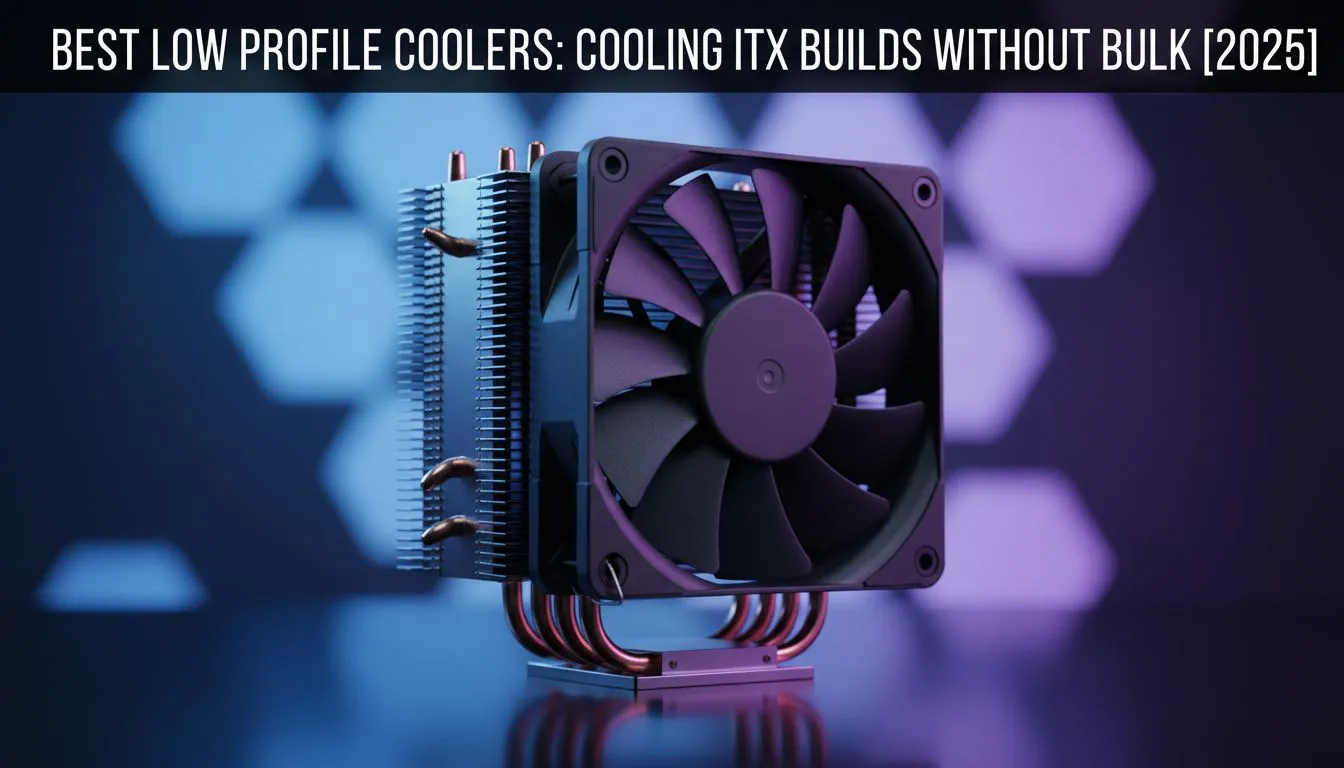
The best low profile CPU cooler is engineered specifically for these tight spaces. It replaces vertical height with clever fin stacks and heat pipe designs to dissipate heat effectively, ensuring your processor runs at boost clocks, even during intense gaming sessions in our warm SA climate. It's a non-negotiable part of any serious ITX build.
Key Factors in Choosing the Best Low Profile Cooler
Before you add anything to your cart, you need to check a few critical specs. Getting this wrong means returns and frustration... so let's get it right the first time.
### CPU Socket & Cooler Clearance
This is rule number one. Check your motherboard's socket type (e.g., AM5, LGA1700) and, most importantly, your case's maximum CPU cooler height specification. This is usually listed in millimetres (mm) on the case's product page. Measure twice, buy once!
### TDP (Thermal Design Power)
Think of TDP as the heat output of your CPU. Your cooler needs a TDP rating that meets or exceeds your processor's. Slapping a 65W cooler on a 125W CPU is a recipe for a very hot, very slow computer. Always aim for a bit of thermal headroom.
### Noise Levels (dBA)
A tiny case can amplify noise. Look for coolers with low dBA ratings. Larger fan diameters (like 92mm or 120mm slim fans) can often spin slower while moving the same amount of air as a smaller fan, resulting in quieter operation. It's a small detail that makes a huge difference.
Measure Before You Buy! 🔧
Always check your ITX case's official spec sheet for the 'Maximum CPU Cooler Height'. Then, check your RAM height. Some low profile coolers have a wide footprint that can overhang the DIMM slots, creating a conflict with tall, flashy RAM modules. Low-profile RAM is often the safest bet in an SFF build.
Air vs. Liquid: The Compact Cooling Showdown
So, which type of cooler should you get? Both have their place in the ITX world.
Traditional air coolers are often the simplest and most reliable choice for SFF builds. They are cost-effective, easy to install, and have no pump noise or risk of leaks. Models from Noctua, be quiet!, and Cooler Master offer incredible performance in a tiny package.
On the other hand, a compact Liquid Cooler (AIO) can offer superior cooling by moving the heat directly to a radiator mounted on the case edge. This is great for high-TDP CPUs. While most ITX cases are limited to 120mm or 240mm radiators, some larger "enthusiast" ITX chassis can even fit a massive 360mm Radiator for unmatched cooling potential. Brands like CORSAIR are leaders in the AIO space, offering reliable performance and clean aesthetics. ✨
Ultimately, the choice depends on your case, CPU, and budget. Both can deliver fantastic results when chosen correctly.
Ready to Beat the Heat? Choosing the right cooler is the final piece of your ITX puzzle. From whisper-quiet air coolers to compact AIOs, the perfect fit is waiting. Explore our massive range of CPU coolers and give your compact build the cooling it deserves.