The Great Refresh Rate Debate: Speed vs Clarity
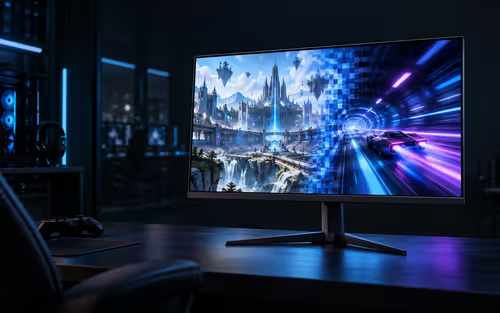
Choosing between 1080p 240Hz vs 1440p 165Hz: Racing Immersion vs Speed is the ultimate crossroads for local gamers. Do you prioritise the buttery smoothness of high frames... or the crisp detail of a higher resolution? Whether you are tearing up Kyalami in a sim or climbing ranks in Valorant, your monitor choice dictates your performance. Let's break down which panel earns a spot on your desk. ⚡
Why 1080p 240Hz Wins for Competitive Speed
If you live for low latency, 1080p at 240Hz is your weapon of choice. This setup is about raw, unfiltered speed. At this refresh rate, motion blur almost vanishes. It gives you a distinct edge in fast-paced shooters where every millisecond counts. Many local players looking for the best PC monitor deals gravitate here to save on hardware costs.
You do not need a flagship GPU to hit 240 FPS in most esports titles. This makes it a cost-effective way to stay competitive without spending a fortune on a new graphics card. You can browse our full range of PC monitors to find the latest high-speed TN or Fast-IPS panels that offer these blistering speeds. 🎯
The 1440p 165Hz Advantage for Sim Racing
1440p offers roughly 78% more pixels than standard HD. This extra clarity is vital for sim racing. You can spot braking markers earlier... and the cockpit details look significantly sharper. While 165Hz is technically slower than 240Hz, it is still incredibly fluid.
For most South African gamers, the jump from 60Hz to 165Hz is massive... while the jump from 165Hz to 240Hz offers diminishing returns for non-professionals. If you want to see every detail of the track, explore all gaming monitors to find a QHD powerhouse that fits your budget. 🏎️
Sim Racing Pro Tip ⚡
When setting up your 1440p monitor for racing, ensure your Field of View (FOV) is calculated correctly. A proper FOV setting makes the speed of the car feel more realistic and helps you judge distances to the apex more accurately. It is the cheapest way to shave seconds off your lap time!
Form Factor and Total Immersion
Immersion is not just about pixels... it is about how the screen fits your vision. Many racers prefer curved monitors to wrap the action around their peripheral view. This makes the environment feel more "closed-in" and realistic.
If you are a mobile gamer or need a secondary display for telemetry data, portable monitors are excellent additions to a modern rig. For those who want the absolute pinnacle of visual fidelity for triple-A titles, our 5K and 4K monitors provide unmatched pixel density. 🖥️
Final Considerations for Your Setup
Before you commit, remember that high-end screens need quality support. Ensure you have the right monitor accessories, such as DisplayPort 1.4 cables or sturdy mounting arms, to handle your new display. A 1440p 165Hz panel usually starts around R6,000 in South Africa, making it a premium but worthwhile investment for the "immersion-first" gamer.
Ready to Find Your Perfect Match? The 1080p vs 1440p debate is all about your personal playstyle. Whether you want the competitive edge of 240Hz or the stunning immersion of QHD, we have the right display for you. Explore our massive range of gaming monitor specials and find the perfect screen to dominate your next race.