Is your corporate laptop sounding more like a jet engine during your Teams meetings? You’re not alone. That constant whirring isn't just annoying; it’s a sign your machine is struggling. In South Africa, where we juggle work between the office, home, and the occasional an unexpected outage scramble, a reliable and quiet laptop is essential. Before you throw it at the wall, let's explore a few simple noisy laptop fan fixes to bring back the peace.
Understanding Why Your Laptop Fan is So Loud
Your laptop’s fan is its primary cooling system. When you're pushing the hardware—think dozens of Chrome tabs, a complex spreadsheet, and a video call all at once—the processor (CPU) and graphics chip (GPU) heat up. The fan spins faster to push hot air out and prevent damage.
The main culprits behind a constantly noisy laptop fan are usually:
- Dust & Debris: Over time, dust clogs the vents and coats the fan blades, making them less effective and forcing them to work harder.
- Intense Software: Some applications are incredibly resource-hungry and will push your CPU to its limits.
- Poor Ventilation: Using your laptop on a soft surface like a bed or couch blocks the air vents, trapping heat. ♨️
Your Noisy Laptop Fan Fix: Practical Steps for Silence
Before considering a replacement, try these steps to quiet your laptop. You might be surprised how effective they can be.
1. Master Your Task Manager
The first step in any noisy laptop fan fix is to see what’s actually causing the strain.
Press Ctrl+Shift+Esc on Windows to open the Task Manager. Click on the "CPU" and "Memory" columns to sort by usage. Do you see a program you're not actively using hogging all the resources? Close it. Often, it's just a rogue browser tab or a background process. Modern processors are much better at handling these loads; many of the latest Intel laptops on special are designed for efficient multitasking.
Quick Clean Pro Tip 🔧
For a non-invasive clean, turn off your laptop completely and unplug it. Use a can of compressed air to spray short bursts into the ventilation grills. This can dislodge surface-level dust that’s trapping heat. Always keep the can upright to avoid spraying liquid propellant inside!
2. Give Your Machine Room to Breathe
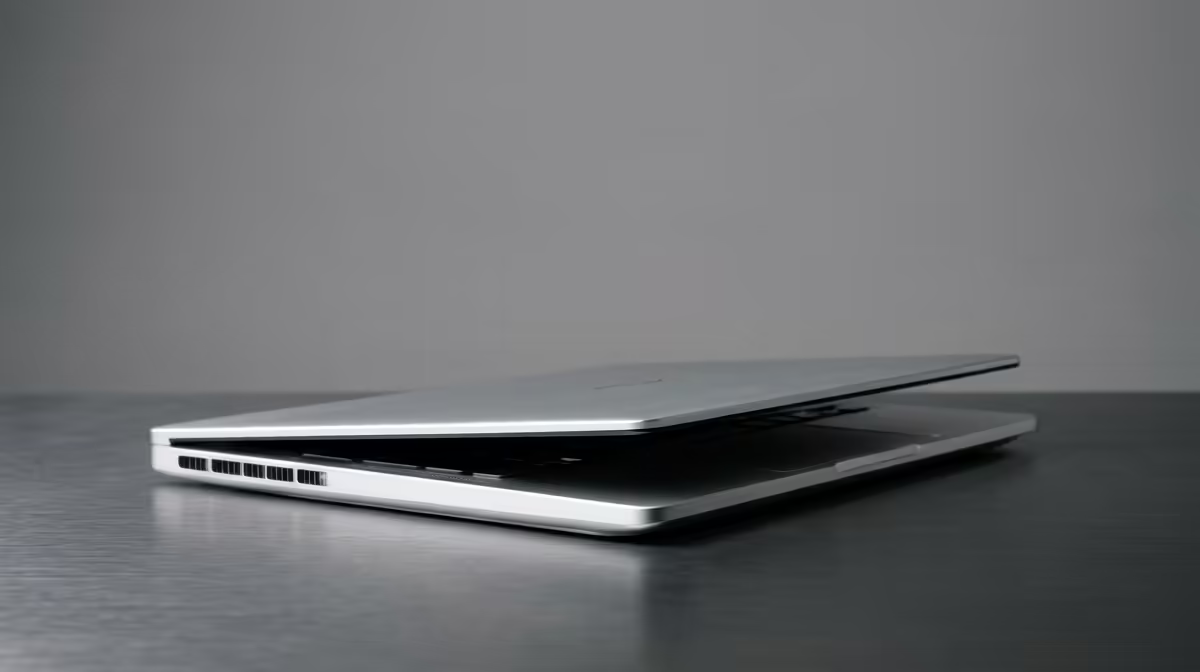
This is the easiest fix of all. Never use your laptop on a blanket or your lap for extended periods. The vents, usually on the bottom and sides, need clear space. Elevating your laptop on a stand or even a thick book can dramatically improve airflow and reduce fan noise. Better airflow means the fan doesn't have to spin as fast to keep things cool.
3. Know When It's Time for an Upgrade
If you've cleaned the vents and managed your software but your laptop still sounds like it's preparing for takeoff, the hardware might just be showing its age. Older components have to work much harder to run modern software, generating more heat.
Sometimes the most effective solution is an upgrade to a machine with a more efficient processor and a better thermal design. For example, many new AMD laptops on special are praised for their excellent performance-per-watt, which means less heat and less fan noise. Even lessons learned from engineering the cooling systems in the best gaming laptop deals have trickled down to improve everyday corporate machines. ✨
A quiet, powerful laptop can make your workday smoother and more professional. If these fixes don't cut it, it might be time to invest in a new workhorse.
Ready for a Quiet & Powerful Upgrade? A noisy laptop is a frustrating distraction. If you're tired of the constant whirring, it might be time for a machine built for modern demands. Explore our massive range of laptop specials for sale in South Africa and find the perfect, peaceful machine to conquer your workday.