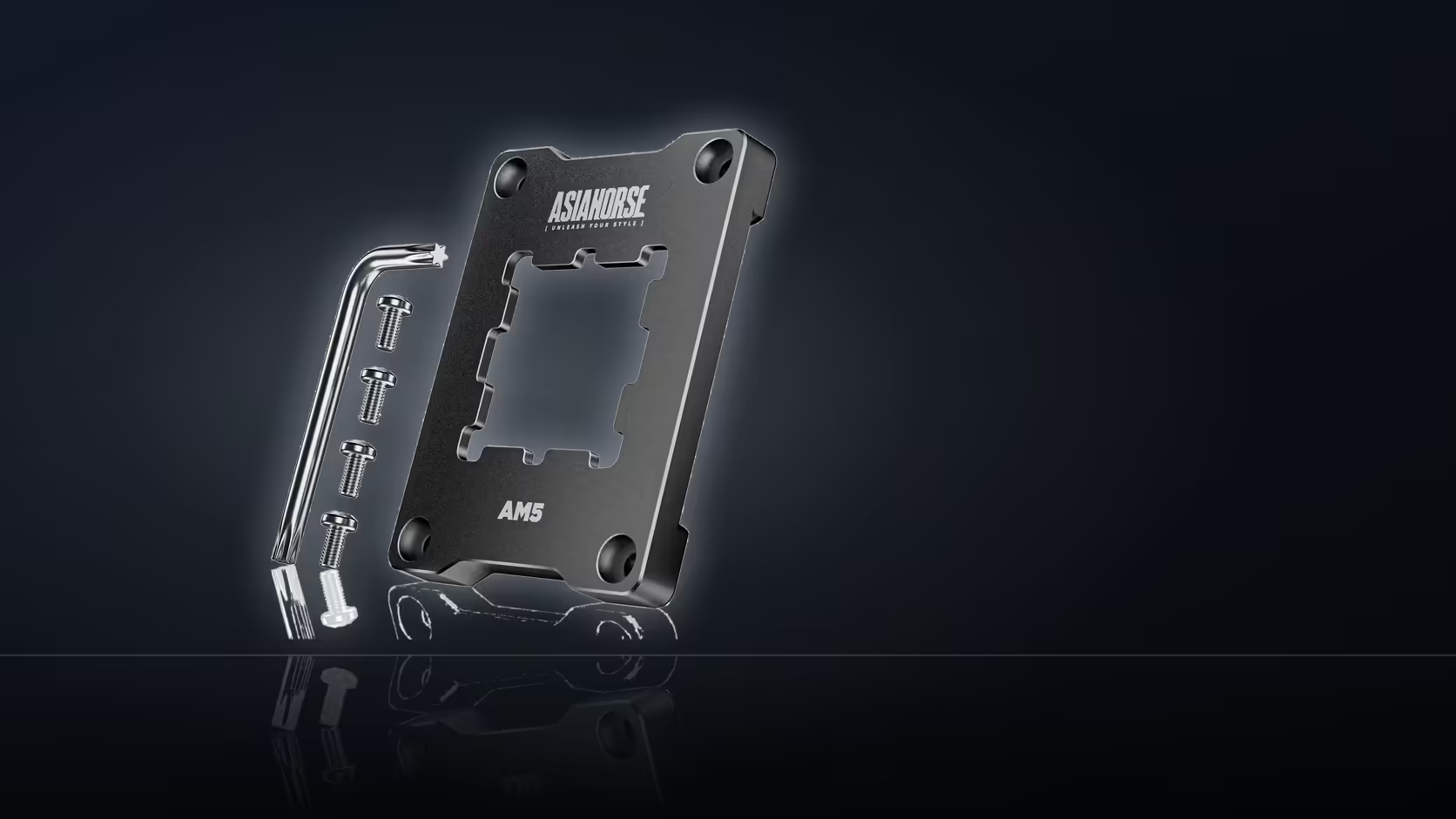
Small hardware has a habit of vanishing the moment a case is open, and a CPU contact frame swap involves two separate sets of it at once - the new frame's own fasteners and whatever comes off your board's original AM5 retention arms. A simple parts tray sitting next to the case, filled as you go rather than after the fact, is the difference between a tidy job and twenty minutes on your knees checking under the desk.
Quick Answer
Keep the four Pulsar frame screws (R299) separate from the original AM5 retention hardware as each set comes off or is about to go on, ideally in a small magnetic tray on the desk rather than loose in a pocket. The two sets are not interchangeable, and losing an original screw is the more serious problem since it is what makes reversing the change back to stock difficult later.
🧲 Why a tray earns its keep on this particular job
Most cooler-related jobs involve one set of small screws. This one involves two, moving in opposite directions at roughly the same time - the stock retention arms come off first, and shortly after, four new screws go on to secure the frame in their place. Without somewhere deliberate to put each set the moment it is free, it is easy to end up with a pile of similar-looking fasteners and no memory of which belongs where.
A tray solves that simply by giving each set its own physical space from the moment it leaves the board, rather than relying on remembering an order after the fact.
Magnetic trays near an open case
A small magnetic parts tray sitting on the desk beside the case, not on the board or inside it, is a sensible and common choice for this kind of work. Keeping any magnet at a reasonable distance from the open machine itself is good general practice, but a tray a hand's width away on the desk causes no issue and makes picking up a tiny screw with cold fingers considerably easier.
📦 Separating the two sets deliberately
The four screws that come with the frame are built to that specific thread and head size, and the original retention arm screws are sized for the stock hardware they were holding. They are not designed to be swapped between the two jobs, so mixing them in one tray means sorting through similar-looking small parts later, often under poor lighting inside a case.
Two small dishes, or two clearly separated corners of one tray, keeps that sorting job from ever needing to happen. Label them if your desk supports it - even a scrap of masking tape under each pile saves a moment of doubt later.
Why the original hardware matters more than it looks
A missing frame screw is inconvenient - there are three companions and a hardware store nearby if it truly cannot be found. A missing original AM5 retention screw is a bigger problem, because it is specifically what a return to the stock mounting configuration depends on later, whether that is a warranty situation, resale, or simply changing your mind about the cooler. Treat that set as the one worth being extra careful with.
🧰 What else belongs in the tray
The supplied hex wrench should sit with the stored hardware once the job is done, since it is the tool the next cooler change will need again. Anything dropped during the process - a screw that rolls somewhere unexpected inside the case - is worth retrieving before power is reconnected, since a stray fastener touching the wrong surface is not a risk worth the few seconds it takes to check.
With everything sorted, refitting the cooler from the cpu coolers range is a clean final step, and a fresh application from thermal solutions finishes it properly before the side panel goes back on.
Frequently Asked Questions
What goes into the tray?
The four supplied frame screws before fitting, and the original retention arms with their screws once removed.
Why separate the two sets?
Because they are not interchangeable, and mixing them means sorting small similar fasteners later under poor light.
Is a magnetic tray safe near a board?
A tray on the desk rather than on the board is fine, though keeping magnets away from the open machine is sensible practice.
What if a screw goes missing?
A frame screw has three companions, so losing one is awkward. A lost original retention screw is worse, since it blocks reversal.
Should anything be labelled?
Marking which set is which saves time, particularly if the original hardware is being stored for the long term.
Where do dropped screws usually go?
Into the case, often under the board or the supply shroud, which is why catching them first matters.
Does this apply to the wrench too?
Keeping the hex wrench with the stored hardware makes sense, since it will be needed at the next cooler refit.
Getting your workspace ready for a frame swap?
Have a look through Evetech's cooler range so the right paste and fittings are on hand before you start sorting hardware.