Tired of watching loading bars? That split second between clicking 'Play' and diving into your game can feel like an eternity. While recent SSDs are fast, the next leap in speed is here. The first wave of PCIe Gen5 SSDs in South Africa is landing, promising to obliterate load times and redefine what 'instant' truly means for your PC. But is this bleeding-edge tech the right upgrade for you, right now? Let's break it down. ✨
What Exactly is a PCIe Gen5 SSD?
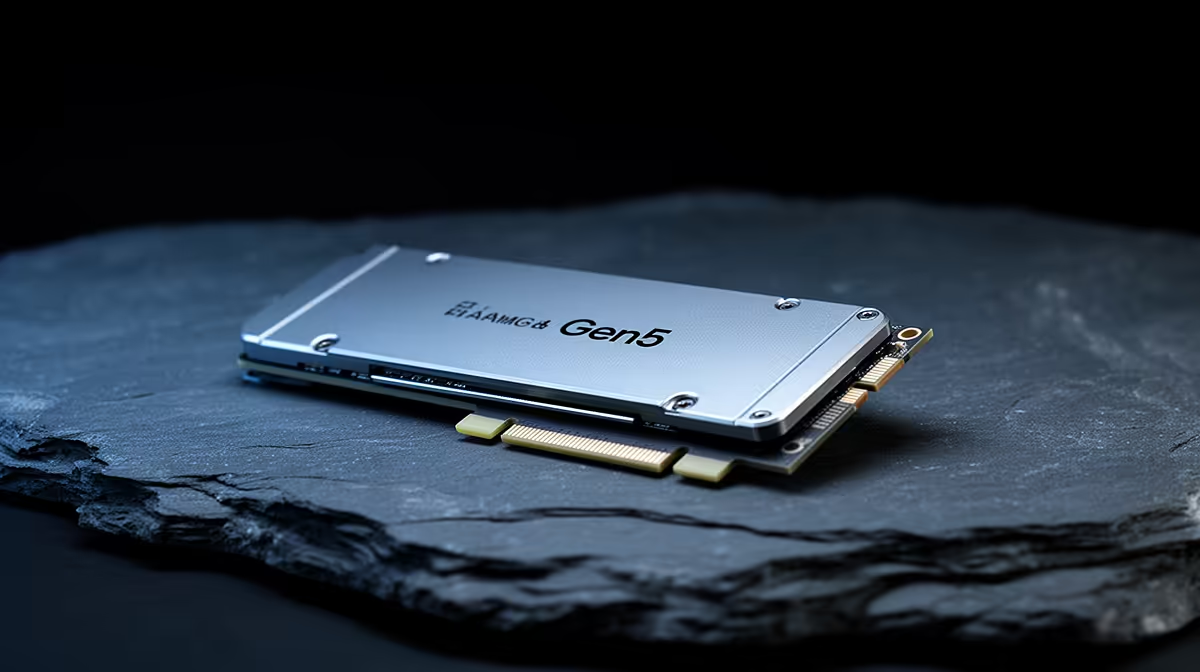
Think of your PC's data pathways like a highway. For years, the standard was PCIe Gen3. Then came Gen4, which effectively doubled the number of lanes. Now, PCIe 5.0 doubles it again. This massive bandwidth boost allows Gen5 drives to achieve breathtaking read and write speeds—we're talking over 12,000 MB/s, nearly double the theoretical maximum of their Gen4 predecessors.
This isn't just a number on a box. It means games that support DirectStorage can load assets almost instantly, 8K video editing becomes smoother, and massive file transfers finish in the blink of an eye. It's the pinnacle of performance for modern NVMe SSDs and a true glimpse into the future of PC storage.
Do You Really Need a PCIe Gen5 SSD in South Africa Right Now?
Let's be honest: for most people, the answer is... probably not yet. A high-quality Gen4 drive is still incredibly fast for gaming and everyday tasks, and you can find some fantastic deals on Gen4 drives that offer unbeatable value.
So, who is a PCIe Gen5 SSD for?
- The Hardcore Enthusiast: If you demand the absolute best and want to build a top-tier rig with zero compromises, this is your next upgrade. 🚀
- The Professional Creator: Video editors working with massive 8K RAW files, 3D modellers, and data scientists will see a tangible, time-saving benefit from the insane throughput.
- The Future-Proofer: If you're building a new PC on a modern platform (like AMD's AM5 or Intel's Z790), investing in a Gen5 drive now means you're set for years of software and gaming advancements.
Check Your Rig First! 🔧
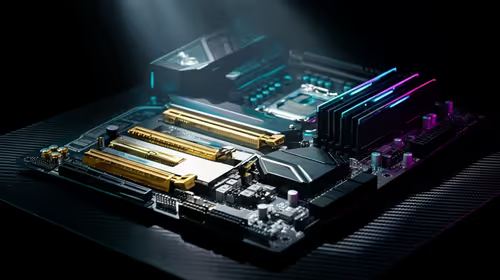
Before you even think about buying a Gen5 SSD, check your motherboard's specs. You'll need a compatible socket (like an AMD AM5 or Intel LGA 1700 board with a Z790 B760 chipset) that explicitly supports PCIe 5.0 for M.2 drives. Plugging a Gen5 drive into a Gen4 slot will work, but it will be limited to Gen4 speeds, wasting your money.
The Speed Difference: Gen5 vs. The Rest
To truly grasp the leap, let's compare the typical maximum speeds:
- Hard Disk Drive (HDD): ~150 MB/s
- SATA SSD: ~550 MB/s
- PCIe Gen4 NVMe SSD: ~7,000 MB/s
- PCIe Gen5 NVMe SSD: ~12,000+ MB/s
The jump from even the fastest older 2.5-inch SATA SSDs to Gen4 was huge. The jump to Gen5 is just as significant. This is the kind of speed that can completely change your workflow and eliminate storage as a bottleneck in your system.
Finding the Right Next-Gen Storage
As the market for PCIe Gen5 SSDs in South Africa grows, you'll see more options become available. When shopping, pay close attention to a few key things:
- Heatsink: These drives run hot! A robust, pre-installed heatsink isn't just for looks; it's essential to prevent thermal throttling and maintain peak performance.
- Endurance (TBW): Terabytes Written (TBW) tells you how much data the drive can write over its lifetime. Higher is always better.
- Capacity: With games and media files getting larger, a 1TB drive is a good starting point, but 2TB offers a much more comfortable sweet spot for a primary drive.
Ready to explore the possibilities? You can browse our complete SSD collection to compare the latest models and find the perfect fit for your build.
Ready to Obliterate Loading Screens? ⚡
The jump to Gen5 is massive, but finding the right drive for your rig and budget is key. Whether you're ready for the absolute bleeding edge or seeking incredible value with a Gen4 drive, we've got you covered. Explore our massive range of high-speed SSDs and find the perfect storage to conquer your world.